
Black holes are among the most mysterious and captivating phenomena in the universe. These cosmic entities, where gravity is so strong that not even light can escape, have puzzled scientists and inspired imaginations for decades. From their formation to their role in shaping galaxies, black holes continue to challenge our understanding of physics and the universe.
In this post, we’ll dive deep into the science of black holes, exploring their formation, types, and the groundbreaking discoveries that have reshaped our knowledge of space and time.
1. What Are Black Holes?
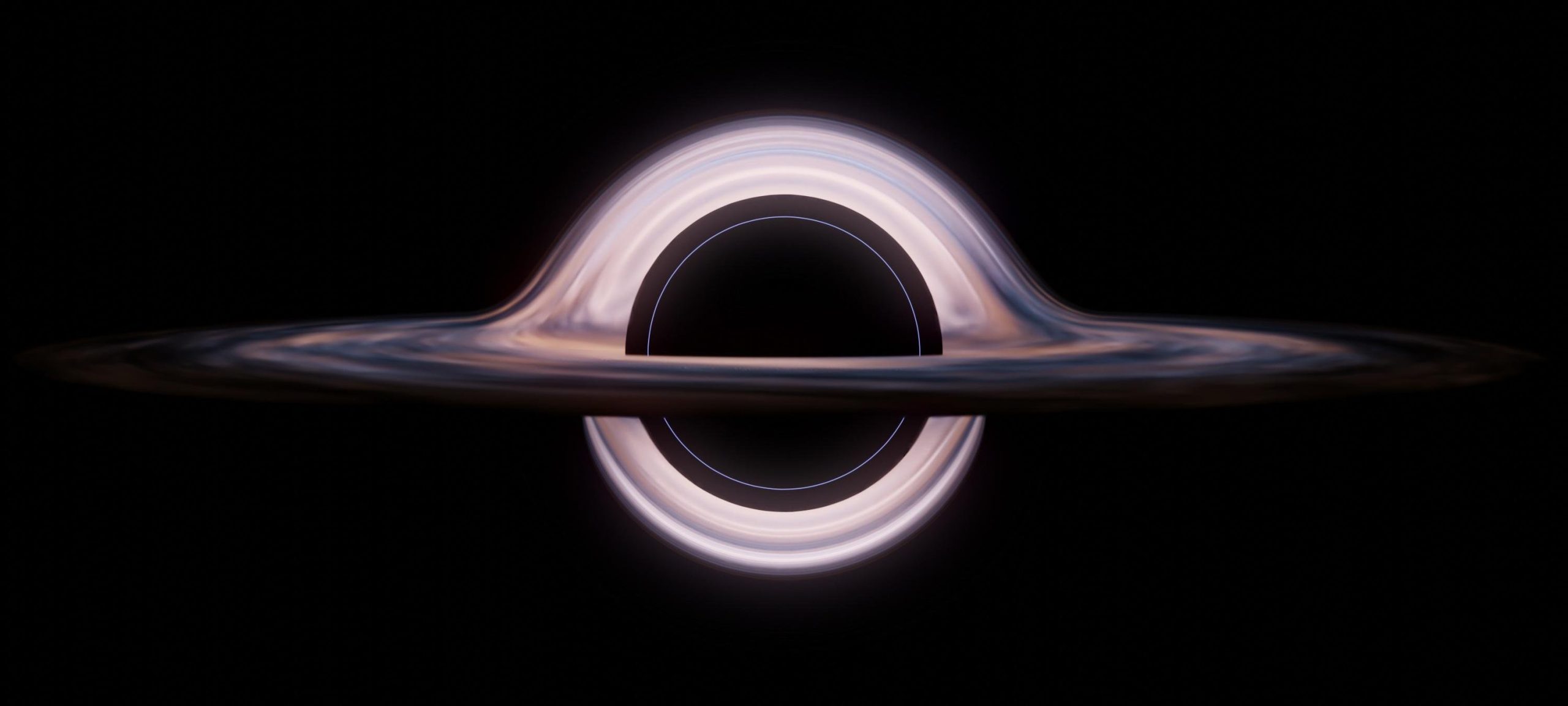
A black hole is a region in space where gravity is so intense that nothing—not even light—can escape its pull. This occurs when a massive amount of matter is compressed into a tiny space, creating a singularity, a point of infinite density at the center of the black hole.
- Event Horizon: The boundary around a black hole from which nothing can escape. Once something crosses this horizon, it is inevitably pulled toward the singularity.
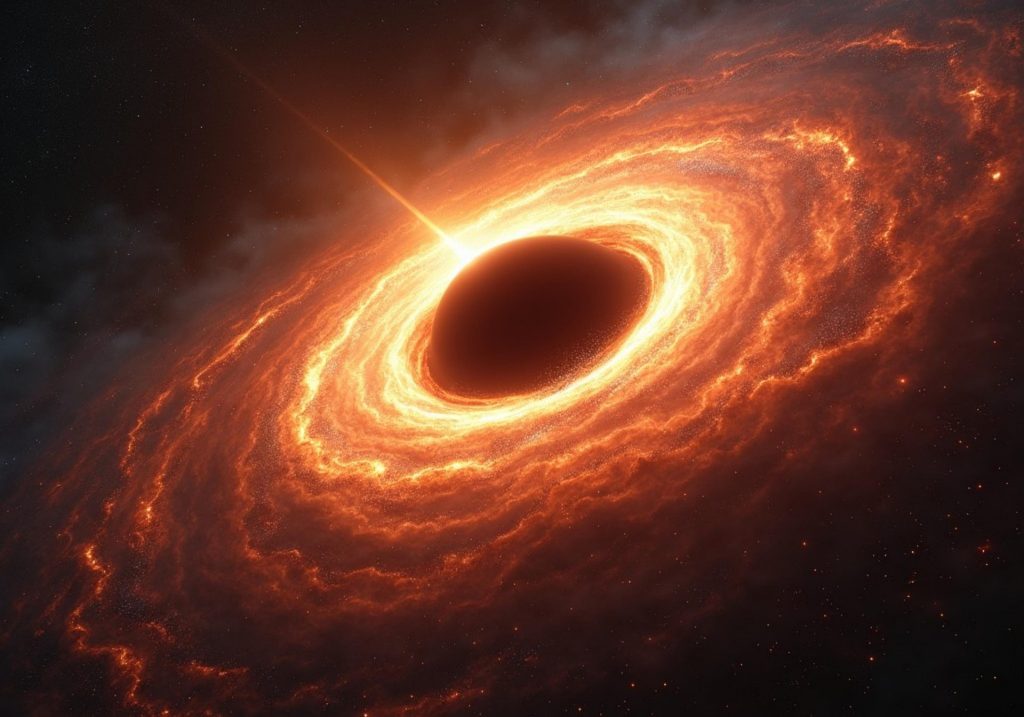
- Accretion Disk: A swirling disk of gas, dust, and other material that orbits the black hole. As this material spirals inward, it heats up and emits X-rays and other radiation, making black holes detectable.
- No-Hair Theorem: A principle suggesting that black holes are remarkably simple, characterized only by their mass, charge, and spin.
Tip: Watch the PBS documentary Black Hole Apocalypse to visualize how black holes form and behave.
2. How Do Black Holes Form?
Black holes form through different processes, depending on their size and origin:
- Stellar Black Holes: These form when a massive star (at least 20 times the mass of our Sun) collapses under its own gravity at the end of its life cycle, resulting in a supernova explosion. The core that remains collapses into a black hole.
- Supermassive Black Holes: Found at the centers of galaxies, these black holes can be millions or billions of times the mass of our Sun. Their formation is still debated, but they may have grown from smaller black holes that merged over time or from the collapse of massive gas clouds in the early universe.
- Intermediate and Primordial Black Holes: Intermediate black holes (100 to 100,000 solar masses) may form from the merger of smaller black holes. Primordial black holes, if they exist, could have formed in the early universe from extremely dense regions.
Tip: Explore NASA’s Black Hole Visualization to see simulations of black holes and their accretion disks.
3. Types of Black Holes
Black holes come in different sizes and types, each with unique properties:
- Stellar Black Holes: The most common type, formed from the collapse of massive stars. They typically range from 5 to 20 times the mass of our Sun.
- Supermassive Black Holes: Located at the centers of galaxies, including our own Milky Way (Sagittarius A*). These can be millions or billions of times the mass of our Sun and play a crucial role in galactic evolution.
- Intermediate Black Holes: Rare and less understood, these black holes have masses between stellar and supermassive black holes. They may form from the merger of smaller black holes or the collapse of massive stars in dense clusters.
- Primordial Black Holes: Hypothetical black holes that could have formed in the early universe. If they exist, they could range from microscopic sizes to several solar masses.
Tip: Read Black Holes and Time Warps by Kip Thorne for a deep dive into the physics of black holes.
4. Detecting Black Holes
Since black holes emit no light, scientists detect them through their effects on surrounding matter and space:
- Gravitational Waves: Ripples in spacetime caused by the collision of black holes or neutron stars. The LIGO and Virgo collaborations have detected multiple black hole mergers, providing direct evidence of their existence.
- X-Ray and Radio Observations: As matter falls into a black hole, it heats up and emits X-rays and radio waves, which telescopes like the Chandra X-ray Observatory and Event Horizon Telescope (EHT) can detect.
- Gravitational Lensing: Black holes bend light from background stars or galaxies, creating distorted or magnified images that reveal their presence.
- Stars Orbiting Invisible Objects: By observing stars orbiting invisible, massive objects, astronomers can infer the presence of black holes. This method was used to confirm the existence of Sagittarius A* at the center of our galaxy.
Tip: Check out the Event Horizon Telescope’s first image of a black hole (M87*) released in 2019.
5. The Role of Black Holes in the Universe
Black holes are not just cosmic curiosities—they play a crucial role in shaping the universe:
- Galactic Evolution: Supermassive black holes at the centers of galaxies influence star formation, gas dynamics, and galactic structure. Their jets and outflows can regulate the growth of galaxies.
- Quasars and Active Galactic Nuclei (AGN): Some supermassive black holes are surrounded by accretion disks that emit enormous amounts of energy, creating quasars—the brightest objects in the universe.
- Gravitational Anchors: Black holes help hold galaxies together and may have played a role in the formation of the first stars and galaxies in the early universe.
- Time and Spacetime: Black holes warp spacetime so intensely that they create time dilation effects predicted by Einstein’s theory of relativity. Near a black hole, time slows down dramatically compared to distant observers.
Tip: Learn about Einstein’s theory of general relativity to understand how black holes warp spacetime.
6. The Information Paradox and Other Mysteries
Black holes present unsolved mysteries that challenge our understanding of physics:
- Information Paradox: According to quantum mechanics, information cannot be destroyed. But when matter falls into a black hole, it seems to disappear forever, raising the question: What happens to the information? Physicists like Stephen Hawking proposed that black holes might slowly evaporate through Hawking radiation, but the paradox remains unresolved.
- Firewalls and the Event Horizon: Some theories suggest that a wall of fire might exist at the event horizon, incinerating anything that crosses it. This contradicts the idea of a smooth passage into a black hole, sparking debates among physicists.
- Wormholes and Time Travel: Black holes are often linked to wormholes—hypothetical tunnels through spacetime that could enable time travel or instant travel across the universe. While wormholes remain speculative, they captivate the imagination and inspire scientific inquiry.
Tip: Watch Interstellar (2014) for a fictional but scientifically inspired portrayal of black holes and wormholes.
7. Black Holes in Popular Culture
Black holes have captured the public imagination, appearing in books, movies, and art:
- Movies and TV: Films like Interstellar (2014) and The Black Hole (1979) explore the science and fiction of black holes. TV shows like Cosmos: A Spacetime Odyssey delve into their real-world science.
- Literature: Authors like Arthur C. Clarke and Isaac Asimov have featured black holes in their sci-fi novels, blending science with storytelling.
- Art and Music: Black holes inspire visual art, music, and even video games, reflecting their mystery and allure. For example, the band Muse references black holes in their album Black Holes and Revelations.
Tip: Explore black hole-themed art on platforms like DeviantArt or Instagram for creative interpretations.
8. The Future of Black Hole Research
Scientists are continuing to unravel the mysteries of black holes with new technologies and theories:
- Event Horizon Telescope (EHT): The EHT collaboration aims to capture more detailed images of black holes, including the supermassive black hole at the center of our galaxy, Sagittarius A*.
- Gravitational Wave Astronomy: Advances in detectors like LIGO, Virgo, and KAGRA will allow scientists to study black hole mergers and other cosmic events in greater detail.
- Quantum Gravity: Researchers are working to reconcile general relativity with quantum mechanics, which could provide insights into the singularity at the heart of black holes.
- Black Hole Simulations: Supercomputers are running detailed simulations of black holes and their environments, helping scientists understand their behavior and effects on the universe.
Tip: Follow NASA, ESA, and EHT for updates on black hole research and discoveries.
Conclusion: The Endless Fascination of Black Holes
Black holes are one of the universe’s greatest mysteries, challenging our understanding of physics, space, and time. From their formation to their role in galactic evolution, black holes continue to inspire awe and curiosity. As technology advances, we are poised to uncover even more about these cosmic enigma—perhaps even answering the question: What lies beyond the event horizon?