
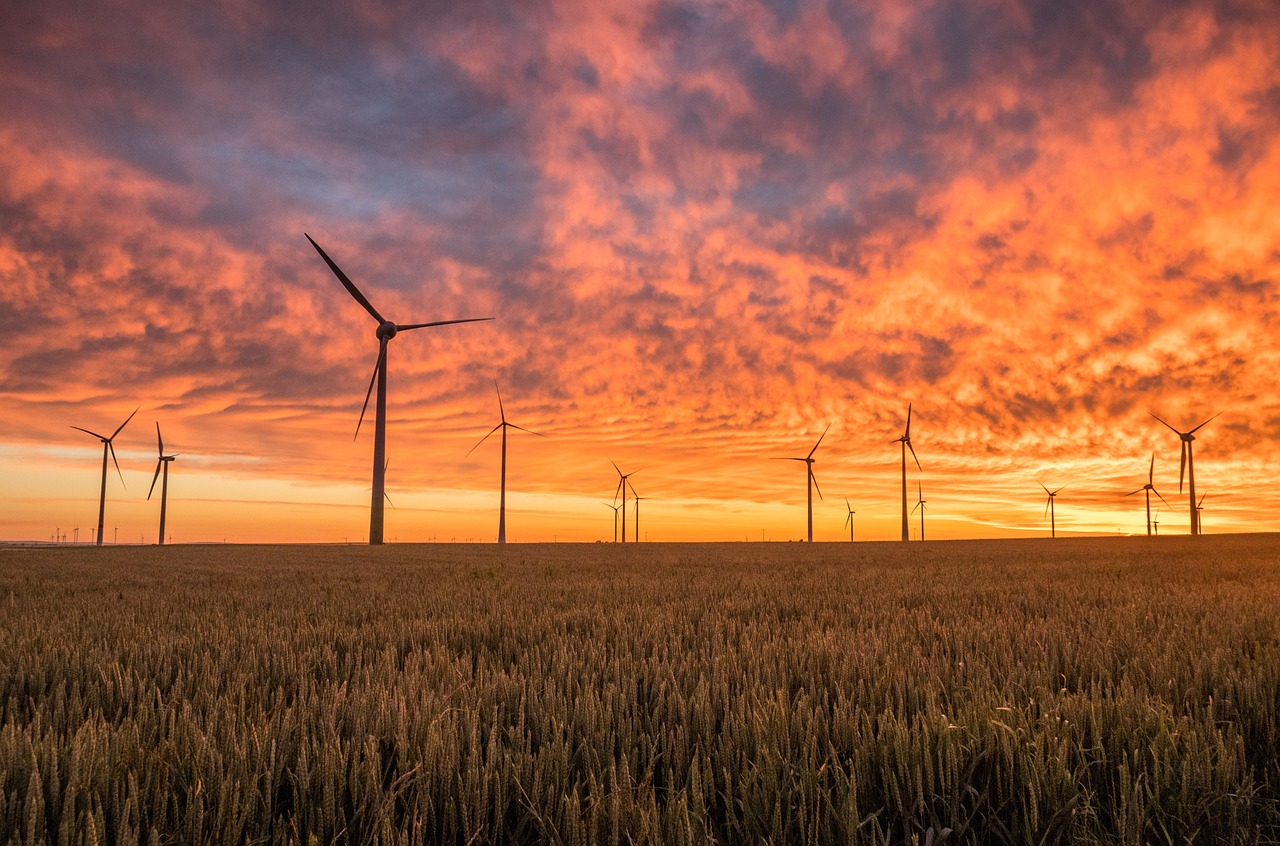
The global transition to renewable energy is one of the most critical and transformative shifts of the 21st century. Driven by climate change, technological advancements, and economic incentives, renewable energy sources like solar, wind, and hydropower are replacing fossil fuels at an unprecedented pace. Innovations in energy storage, smart grids, and efficiency are making renewables more reliable and cost-effective than ever before. This post explores the history, breakthroughs, challenges, and future of renewable energy, and how it is reshaping economies, environments, and societies worldwide.
The Early Days of Renewable Energy
Renewable energy is not a new concept—humans have harnessed wind and water power for millennia. However, the modern renewable energy movement began in the late 19th and early 20th centuries, driven by scientific curiosity and the need for sustainable power.
- Hydropower: The First Large-Scale Renewable:
- 1882: The world’s first hydroelectric power plant was built in Appleton, Wisconsin, powering two paper mills and a home.
- Hoover Dam (1936): One of the largest hydropower projects of its time, generating 4,200 MW and supplying power to millions in the southwestern U.S.
- Three Gorges Dam (2003, China): The world’s largest hydropower station, with a 22,500 MW capacity, but also controversial for its environmental and social impacts.
- Wind Power: From Mills to Turbines:
- Persian Windmills (500–900 CE): Early vertical-axis windmills used for grinding grain and pumping water.
- 1887: Charles F. Brush built the first automatically operating wind turbine in Cleveland, Ohio, generating 12 kW of power.
- 1940s–1970s: Denmark and Germany pioneered modern wind power, with small-scale turbines for rural electrification.
- Solar Power: From Photovoltaics to Grid Scale:
- 1839: Edmond Becquerel discovered the photovoltaic effect, laying the foundation for solar cells.
- 1954: Bell Labs created the first practical silicon solar cell, achieving 6% efficiency.
- 1970s Oil Crisis: Spurred investment in solar research, leading to cost reductions and efficiency improvements.
Tip: Visit the Hoover Dam or Three Gorges Dam to see large-scale hydropower in action.
The Solar Revolution: From Niche to Mainstream
Solar power has transformed from a niche technology to the fastest-growing energy source worldwide. Advances in photovoltaic (PV) efficiency, manufacturing, and storage have made solar cheaper than coal in many regions.
- The Solar Cell Breakthroughs:
- 1950s–1970s: Early solar cells were expensive and inefficient (5–10% efficiency), used primarily in space applications (e.g., Vanguard I satellite, 1958).
- 1980s–2000s: Thin-film solar and polycrystalline silicon reduced costs, while efficiency improved to 15–20%.
- 2010s–Present: Perovskite solar cells (30%+ efficiency in labs) and bifacial panels (capturing light on both sides) are pushing boundaries.
- Grid Parity and Cost Reductions:
- Swanson’s Law (2011): Observed that solar module prices drop ~20% for every doubling of cumulative shipments (similar to Moore’s Law).
- 2016: Solar became cheaper than coal in many countries, including China, India, and the U.S.
- 2023: The levelized cost of solar energy (LCOE) fell to $0.03–$0.05/kWh, compared to $0.05–$0.15/kWh for coal.
- Utility-Scale Solar Farms:
- Bhadla Solar Park (India, 2020): The world’s largest solar farm (2,245 MW), covering 14 km² in the Thar Desert.
- Noor Ouarzazate (Morocco, 2016): A 580 MW solar complex with concentrated solar power (CSP), storing energy in molten salt.
- Solar Star (U.S., 2015): A 579 MW plant in California, powering 255,000 homes.
Tip: Explore Google Earth’s timelapse of solar farm expansions in deserts worldwide.
The Wind Power Boom: Onshore to Offshore
Wind power has evolved from small turbines to gigantic offshore farms, becoming one of the most cost-effective energy sources. Innovations in turbine design, materials, and offshore installations are driving efficiency and scalability.
- Onshore Wind Farms:
- 1980s: Denmark and California led the first wind power boom, with tens of thousands of small turbines.
- 2000s: Larger turbines (2–3 MW) and improved aerodynamics increased efficiency.
- 2020s: 15 MW turbines (e.g., GE’s Haliade-X) can power 16,000 homes each.
- Offshore Wind: The Next Frontier:
- 2000s: Europe pioneered offshore wind, with Denmark’s Horns Rev (2002, 160 MW) and UK’s London Array (2013, 630 MW).
- 2020s: Floating wind turbines (e.g., Hywind Scotland, 2017) allow deeper water installations, unlocking vast offshore potential.
- Dogger Bank (UK, 2023+): The world’s largest offshore wind farm (3.6 GW), powering 6 million homes.
- Wind Energy Storage and Grid Integration:
- Pumped Hydro Storage: Excess wind energy pumps water uphill, releasing it to generate hydro power when needed (e.g., Dinorwig Power Station, UK).
- Battery Storage: Lithium-ion and flow batteries store wind energy for grid stability (e.g., Horns Rev 3’s battery system).
- Smart Grids: AI and IoT optimize wind farm output and balance supply-demand in real-time.
Tip: Watch “The Boy Who Harnessed the Wind” (2019) to see how wind power transforms rural communities.
The Storage Revolution: Batteries and Beyond
Energy storage is the missing link for renewable energy, enabling 24/7 reliability and grid independence. Breakthroughs in battery technology, pumped hydro, and alternative storage are accelerating the transition away from fossil fuels.
- Lithium-Ion Batteries: The Game Changer:
- 1991: Sony commercialized lithium-ion batteries, revolutionizing consumer electronics.
- 2010s: Tesla’s Powerwall (2015) and Powerpack brought home and grid-scale storage to the masses.
- 2023: Lithium-ion costs dropped 90% since 2010, reaching $130–$200/kWh, making solar+storage cheaper than gas peaker plants.
- Beyond Lithium: Next-Gen Batteries:
- Solid-State Batteries: Toyota and QuantumScape are developing safer, higher-energy-density batteries for EVs and grid storage.
- Flow Batteries: Vanadium redox flow batteries (e.g., China’s 100 MW Dalian project) offer long-duration storage without degradation.
- Gravity Storage: Energy Vault uses cranes and weights to store energy, with no degradation over 30+ years.
- Pumped Hydro and Compressed Air:
- Pumped Hydro: 90% of global energy storage (e.g., Bath County Pumped Storage, U.S., 3 GW).
- Compressed Air Energy Storage (CAES): Stores energy as compressed air in underground caverns (e.g., McIntosh, Alabama, 226 MW).
- Thermal Storage: Molten salt and phase-change materials store heat for solar thermal plants (e.g., Gemini Solar, Nevada).
Tip: Visit Tesla’s Hornsdale Power Reserve (Australia) to see the world’s largest lithium-ion battery in action.
Smart Grids and the Energy Internet
The modernization of electrical grids through digitalization, AI, and decentralization is enabling the renewable energy transition. Smart grids balance supply and demand, integrate distributed energy resources (DERs), and enhance resilience.
- The Energy Internet:
- Decentralized Grids: Microgrids and peer-to-peer (P2P) energy trading (e.g., Brooklyn Microgrid, LO3 Energy) allow local energy sharing.
- Blockchain for Energy: Power Ledger and Electron use blockchain to track and trade renewable energy in real-time.
- Vehicle-to-Grid (V2G): Electric vehicles (EVs) act as mobile batteries, feeding power back to the grid (e.g., Nissan and Fermata Energy’s pilots).
- AI and Predictive Analytics:
- Demand Forecasting: AI predicts energy demand to optimize generation and storage (e.g., Google’s DeepMind for UK’s National Grid).
- Fault Detection: Smart sensors detect grid failures before they occur, reducing outages and maintenance costs.
- Dynamic Pricing: Real-time pricing incentivizes consumers to use energy when it’s cheapest (e.g., Octopus Energy’s Agile tariff).
- Global Smart Grid Initiatives:
- U.S. Smart Grid Investment Grant (2009): $4.5 billion to modernize 100+ utilities.
- EU’s Smart Grids Task Force: Standardizing smart grid technologies across Europe.
- China’s State Grid Corporation: The world’s largest smart grid, integrating 700+ million smart meters.
Tip: Explore Germany’s Energiewende (energy transition) to see how smart grids and renewables are phasing out nuclear and coal.
Challenges and Barriers to Renewable Adoption
Despite rapid growth, renewable energy faces technical, economic, and political challenges that must be addressed for a full transition away from fossil fuels.
- Intermittency and Grid Stability:
- Solution: Diversified renewable portfolios (solar + wind + hydro) and advanced storage (batteries, pumped hydro) smooth out supply.
- Example: Australia’s Hornsdale Power Reserve uses Tesla batteries to stabilize the grid during blackouts.
- Supply Chain and Material Constraints:
- Rare Earth Metals: Neodymium (wind turbines), lithium (batteries), and silicon (solar panels) face supply shortages and geopolitical risks.
- Solution: Recycling programs (e.g., Redwood Materials for batteries) and alternative materials (e.g., sodium-ion batteries).
- Policy and Regulatory Hurdles:
- Fossil Fuel Subsidies: $7 trillion/year globally distort markets in favor of coal, oil, and gas.
- Solution: Carbon pricing (e.g., EU’s Emissions Trading System) and renewable energy mandates (e.g., California’s 100% clean energy by 2045).
- Energy Equity and Access:
- Global Disparities: 1 billion people still lack access to electricity, mostly in sub-Saharan Africa and South Asia.
- Solution: Off-grid solar (e.g., M-KOPA in Kenya) and microgrids bring affordable, clean energy to remote areas.
Tip: Follow IRENA’s reports (irena.org) for global renewable energy trends and policies.
The Future of Renewable Energy: Trends and Innovations
The next decade will see accelerated innovation in renewable energy, driven by technological breakthroughs, policy shifts, and market demands. Here’s what’s on the horizon:
- Perovskite Solar Cells:
- 30%+ efficiency in labs, with potential for ultra-cheap, flexible panels.
- Oxford PV (2023): Commercializing perovskite-silicon tandem cells for rooftop and utility-scale use.
- Floating Solar and Wind:
- Floating solar farms on reservoirs and oceans (e.g., Singapore’s 60 MW Tengeh Reservoir project).
- Floating wind turbines in deep waters (e.g., Hywind Tampen, Norway, 88 MW).
- Green Hydrogen:
- Electrolysis powered by renewables produces green hydrogen for industrial decarbonization.
- NEOM’s $5B Green Hydrogen Project (Saudi Arabia, 2026): The world’s largest green hydrogen plant (650 tons/day).
- Nuclear Fusion:
- ITER (2025+): The world’s largest fusion experiment aims to prove net-energy-positive fusion.
- Private Ventures: Commonwealth Fusion, TAE Technologies race to commercialize fusion by the 2030s.
- AI and Renewable Energy:
- AI-Optimized Wind Farms: Google’s DeepMind boosts wind farm efficiency by 20% using real-time adjustments.
- Predictive Maintenance: Siemens Gamesa uses AI to predict turbine failures and reduce downtime.
Tip: Watch “The Switch” (2012) to see how renewable energy is transforming global economies.
Conclusion: A Sustainable Energy Future
The transition to renewable energy is one of humanity’s greatest challenges—and opportunities. From solar and wind farms to smart grids and energy storage, innovations are making clean energy more reliable, affordable, and scalable than ever before. While challenges remain, the momentum is undeniable: renewables are outcompeting fossil fuels on cost, creating jobs, and reducing emissions.
As solar panels become cheaper, wind turbines grow taller, and batteries store more energy, we are entering an era where 100% renewable energy is not just possible, but inevitable. The question is no longer if, but how fast we can make the transition—and what kind of world we will build in the process.