Artificial Intelligence (AI) has evolved from a theoretical concept in the 1950s to a ubiquitous force shaping modern life. What began as Alan Turing’s question—”Can machines think?”—has blossomed into self-driving cars, AI-powered healthcare, and generative models like ChatGPT. Today, AI is redefining industries, challenging ethical norms, and raising questions about the future of humanity. This post explores AI’s origins, breakthroughs, applications, and the debates surrounding its rapid advancement.
1. The Theoretical Foundations of AI
The idea of machines that could mimic human intelligence dates back to antiquity, but modern AI began in the mid-20th century with formal logic, computation theory, and early neural networks.
- Alan Turing and the Imitation Game (1950):
- In his 1950 paper, “Computing Machinery and Intelligence,” Turing proposed the Imitation Game (later called the Turing Test), a criterion for machine intelligence: If a machine could fool a human into believing it was human, it could be considered intelligent.
- Turing’s work laid the foundation for AI research, framing the philosophical and technical challenges of creating thinking machines.
- The Dartmouth Conference (1956):
- The Dartmouth Summer Research Project on Artificial Intelligence (1956) is considered the birth of AI as a field.
- Organized by John McCarthy, Marvin Minsky, Nathaniel Rochester, and Claude Shannon, the conference coined the term “artificial intelligence” and set the research agenda for decades.
- Early AI programs like Logic Theorist (1956) and General Problem Solver (1957) attempted to mimic human reasoning, though with limited success.
- Symbolic AI vs. Connectionism:
- Symbolic AI (1950s–1980s): Focused on rule-based systems and logical reasoning (e.g., expert systems like MYCIN for medical diagnosis).
- Connectionism (1980s–Present): Revived neural networks, inspired by the human brain’s structure. Backpropagation (1986) enabled training multi-layer networks, leading to modern deep learning.
Tip: Read “Artificial Intelligence: A Modern Approach” by Stuart Russell and Peter Norvig for a comprehensive history of AI’s theoretical roots.
2. Key Milestones in AI Development
AI’s evolution has been marked by breakthroughs in algorithms, hardware, and applications, each expanding its capabilities and impact.
- The AI Winter (1970s–1980s):
- After early optimism, AI research stalled due to limited computing power and unmet promises.
- Funding dried up, and progress slowed—a period known as the “AI Winter.”
- Expert systems (e.g., XCON for computer configuration) were among the few successes, but neural networks were largely abandoned.
- The Revival of Neural Networks (1986–2000s):
- Geoffrey Hinton, Yann LeCun, and Yoshua Bengio revived neural networks with backpropagation, enabling deep learning.
- Convolutional Neural Networks (CNNs, 1998) by LeCun improved image recognition, paving the way for computer vision.
- Support Vector Machines (SVMs, 1990s) became popular for classification tasks before deep learning’s resurgence.
- Big Data and GPU Acceleration (2000s–2010s):
- The explosion of digital data (e.g., social media, sensors, and the web) provided massive datasets to train AI models.
- GPUs (Graphics Processing Units) enabled parallel processing, accelerating deep learning training by 100x or more.
- ImageNet (2012): A CNN by Hinton’s team achieved breakthrough accuracy in image classification, reviving AI research.
- Generative AI and Large Language Models (2010s–Present):
- Generative Adversarial Networks (GANs, 2014) by Ian Goodfellow enabled realistic image and video synthesis.
- Transformer models (2017): Introduced by Google Brain, transformers revolutionized NLP (Natural Language Processing) with attention mechanisms.
- GPT-3 (2020) and GPT-4 (2023): OpenAI’s large language models (LLMs) demonstrated human-like text generation, powering ChatGPT and Bing AI.
- Stable Diffusion (2022) and MidJourney brought AI-generated art to the mainstream.
Tip: Explore Google’s Transformer paper (2017) to understand how attention mechanisms revolutionized NLP.
3. AI Applications: Transforming Industries
AI’s real-world applications span healthcare, finance, transportation, and entertainment, transforming how we live and work.
- Healthcare and Medicine:
- Diagnostics: AI models analyze medical images (e.g., X-rays, MRIs) for early disease detection (e.g., lung cancer, diabetic retinopathy).
- Drug Discovery: AlphaFold (DeepMind, 2020) predicts protein structures, accelerating drug development (e.g., COVID-19 vaccine research).
- Robotic Surgery: AI-assisted systems like da Vinci improve precision and outcomes in minimally invasive procedures.
- Finance and Trading:
- Algorithmic Trading: AI models predict market trends and execute trades in microseconds (e.g., Renaissance Technologies, Two Sigma).
- Fraud Detection: Banks use AI to flag suspicious transactions in real-time (e.g., Mastercard’s Decision Intelligence).
- Personalized Banking: AI chatbots (e.g., Erica by Bank of America) provide 24/7 customer service and financial advice.
- Autonomous Vehicles:
- Waymo (Google), Tesla, and Cruise (GM) use AI for self-driving cars, combining computer vision, sensor fusion, and reinforcement learning.
- Level 4 autonomy (no human intervention) is achieved in geofenced areas, with Level 5 (full autonomy) still in development.
- Ethical dilemmas (e.g., trolley problem) remain unresolved, requiring regulatory frameworks.
- Entertainment and Media:
- Recommendation Systems: Netflix, Spotify, and YouTube use AI to personalize content, driving 80% of watched time.
- AI-Generated Content: Tools like Jasper, Synthesia, and DALL·E create text, video, and images, raising copyright and authenticity issues.
- Deepfake Detection: AI is used to both create and detect deepfakes, with Microsoft’s Video Authenticator leading the charge.
- Manufacturing and Robotics:
- Predictive Maintenance: AI monitors equipment to predict failures before they occur (e.g., Siemens’ MindSphere).
- Collaborative Robots (Cobots): AI-powered robots like Rethink Robotics’ Baxter work alongside humans in factories and warehouses.
- Supply Chain Optimization: AI forecasts demand and optimizes logistics (e.g., Amazon’s anticipatory shipping).
Tip: Try AI-powered tools like Notion AI or GitHub Copilot to experience how AI enhances productivity.
4. Ethical Dilemmas and Challenges
AI’s rapid advancement raises profound ethical, social, and existential questions, from **bias and privacy to job displacement and autonomous weapons.
- Bias and Fairness:
- AI systems inherit biases from training data. Examples:
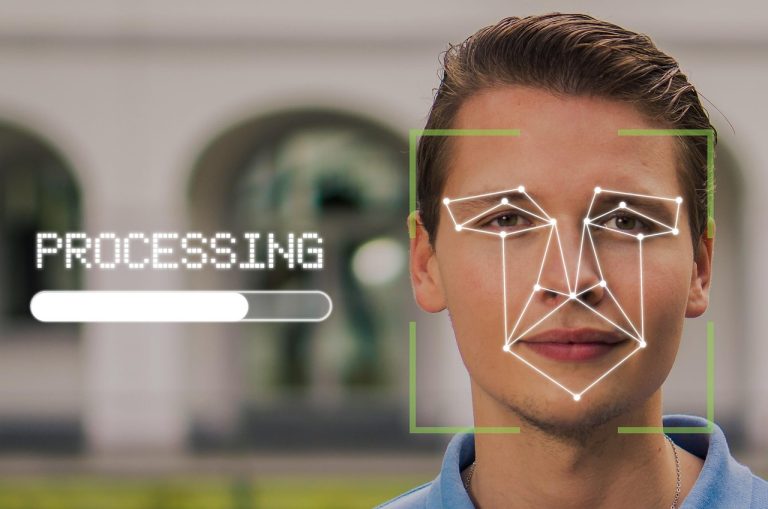
- Facial Recognition: Higher error rates for women and people of color (e.g., MIT study on Amazon’s Rekognition).
- Hiring Algorithms: Amazon’s AI recruiter favored male candidates due to historical hiring data.
- Mitigation Strategies: Diverse training data, algorithmic audits, and fairness-aware models (e.g., IBM’s AI Fairness 360).
- AI systems inherit biases from training data. Examples:
- Privacy and Surveillance:
- Mass Surveillance: Governments use AI for facial recognition and predictive policing (e.g., China’s Skynet system).
- Data Exploitation: Cambridge Analytica scandal (2018) exposed how AI-driven microtargeting influenced elections.
- GDPR and AI Ethics: The EU’s General Data Protection Regulation (GDPR) and AI Act (2024) aim to regulate AI’s use of personal data.
- Job Displacement and Economic Impact:
- Automation Risk: McKinsey estimates that 30% of global work hours could be automated by 2030.
- Reskilling Initiatives: Programs like Microsoft’s AI Skills Initiative aim to prepare workers for an AI-augmented economy.
- Universal Basic Income (UBI): Proposed as a solution to AI-driven unemployment (e.g., Andrew Yang’s Freedom Dividend).
- Autonomous Weapons:
- Lethal Autonomous Weapons Systems (LAWS) raise moral and legal questions about accountability and humanitarian law.
- The Campaign to Stop Killer Robots advocates for a preemptive ban on fully autonomous weapons.
- UN debates on AI arms control continue, with no binding treaties yet in place.
- Existential Risks:
- Superintelligence: Could an AI surpass human intelligence and act against human interests? (e.g., Nick Bostrom’s “Superintelligence”).
- Alignment Problem: Ensuring AI systems pursue human-aligned goals (e.g., OpenAI’s alignment research).
- AI Safety Research: Organizations like FLI (Future of Life Institute) and CAIS (Center for AI Safety) study long-term risks.
Tip: Read “Superintelligence: Paths, Dangers, Strategies” by Nick Bostrom to explore AI’s existential risks.
5. The Future of AI: Possibilities and Precautions
AI’s trajectory is unpredictable, with breakthroughs and risks emerging in tandem. Governments, researchers, and ethicists are shaping its future through policy, innovation, and public dialogue.
- AGI and Beyond:
- Artificial General Intelligence (AGI): Hypothetical AI with human-like cognitive abilities across all domains.
- Timelines vary: Ray Kurzweil predicts AGI by 2029; others argue it’s decades away or impossible.
- AGI Safety: Research focuses on containment, alignment, and control to prevent catastrophic outcomes.
- AI for Good:
- UN Sustainable Development Goals (SDGs): AI is applied to climate modeling, poverty reduction, and healthcare access.
- AI for Climate: Google’s DeepMind uses AI to optimize energy grids and predict extreme weather.
- AI in Education: Personalized learning platforms (e.g., Duolingo, Khan Academy) adapt to student needs.
- Global AI Governance:
- EU AI Act (2024): The world’s first comprehensive AI law, classifying AI by risk level (e.g., banned, high-risk, limited-risk).
- U.S. AI Bill of Rights (2022): Outlines principles for safe AI, including transparency and accountability.
- Global Partnership on AI (GPAI): A multi-stakeholder initiative for responsible AI development.
- Public Engagement and AI Literacy:
- AI Ethics Courses: Universities (e.g., MIT, Stanford) offer public courses on AI’s societal impacts.
- Citizen Assemblies: Deliberative democracy projects (e.g., UK’s AI Citizens’ Jury) involve public input in AI policy.
- AI Art and Culture: Artists use AI to explore its creative and ethical dimensions (e.g., Refik Anadol’s data sculptures).
Tip: Follow Partnership on AI (partnershiponai.org) for updates on global AI governance.
The Double-Edged Sword of Intelligence
Artificial Intelligence is one of humanity’s most powerful tools—and greatest challenges. From Turing’s theoretical foundations to today’s generative models, AI has reshaped industries, cultures, and daily life. Yet, its ethical dilemmas—bias, privacy, job displacement, and existential risks—demand urgent attention. As AI continues to evolve, the choices we make today will determine whether it empowers or endangers humanity. The future of AI is not predetermined; it will be shaped by the values, policies, and innovations we prioritize now.