
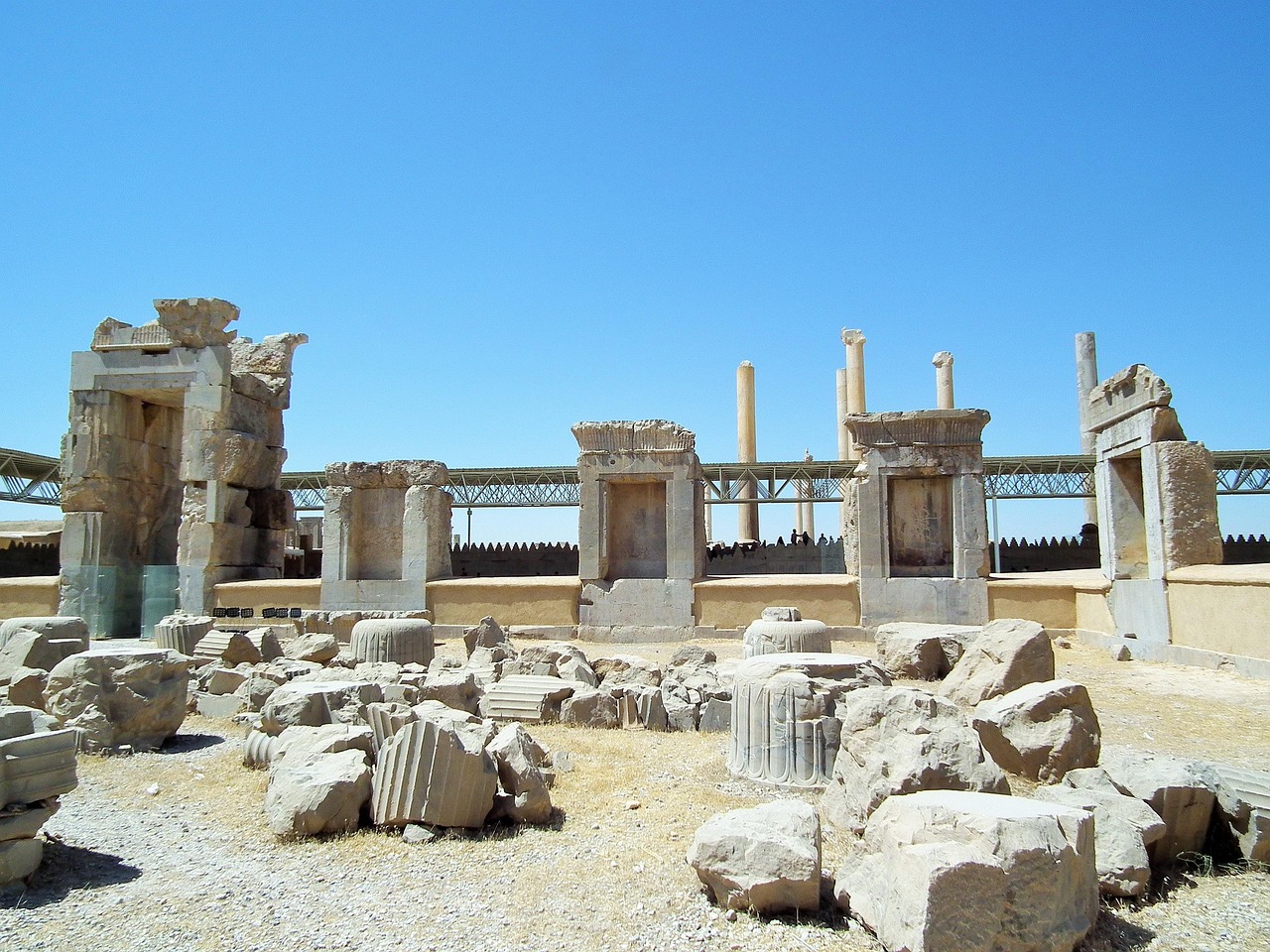
The Persian Empire (550–330 BCE) was the largest empire of its time, stretching from the Balkans to the Indus Valley. Known for its administrative efficiency and cultural tolerance, it set a precedent for future empires.
1. Cyrus the Great and the Rise of Persia
Cyrus the Great founded the empire and is remembered for his humane governance and the Cyrus Cylinder, often called the first charter of human rights. His policies of tolerance and inclusion were revolutionaryubertrends.com.
Tip: Visit the National Museum of Iran in Tehran to see artifacts from the Persian Empire.
2. Persepolis: The Heart of the Empire
Persepolis was the ceremonial capital of the Persian Empire, featuring grand palaces, reliefs, and inscriptions. It symbolized the empire’s wealth and power, and its ruins are a UNESCO World Heritage Siteaccio.com.
Tip: Explore Persepolis to see the Gate of All Nations and the Apadana Palace.
3. Cultural and Scientific Achievements
The Persians made advancements in astronomy, medicine, and infrastructure. They built royal roads, qanats (underground water channels), and gardens that influenced later civilizationsfreebeatfit.com.
Tip: Visit Pasargadae, the first dynastic capital of the Persian Empire, to see Cyrus the Great’s tomb.
Conclusion: A Legacy of Innovation and Tolerance
The Persian Empire’s administrative brilliance and cultural openness left a lasting impact on history. Its legacy reminds us of the importance of diversity and inclusion.