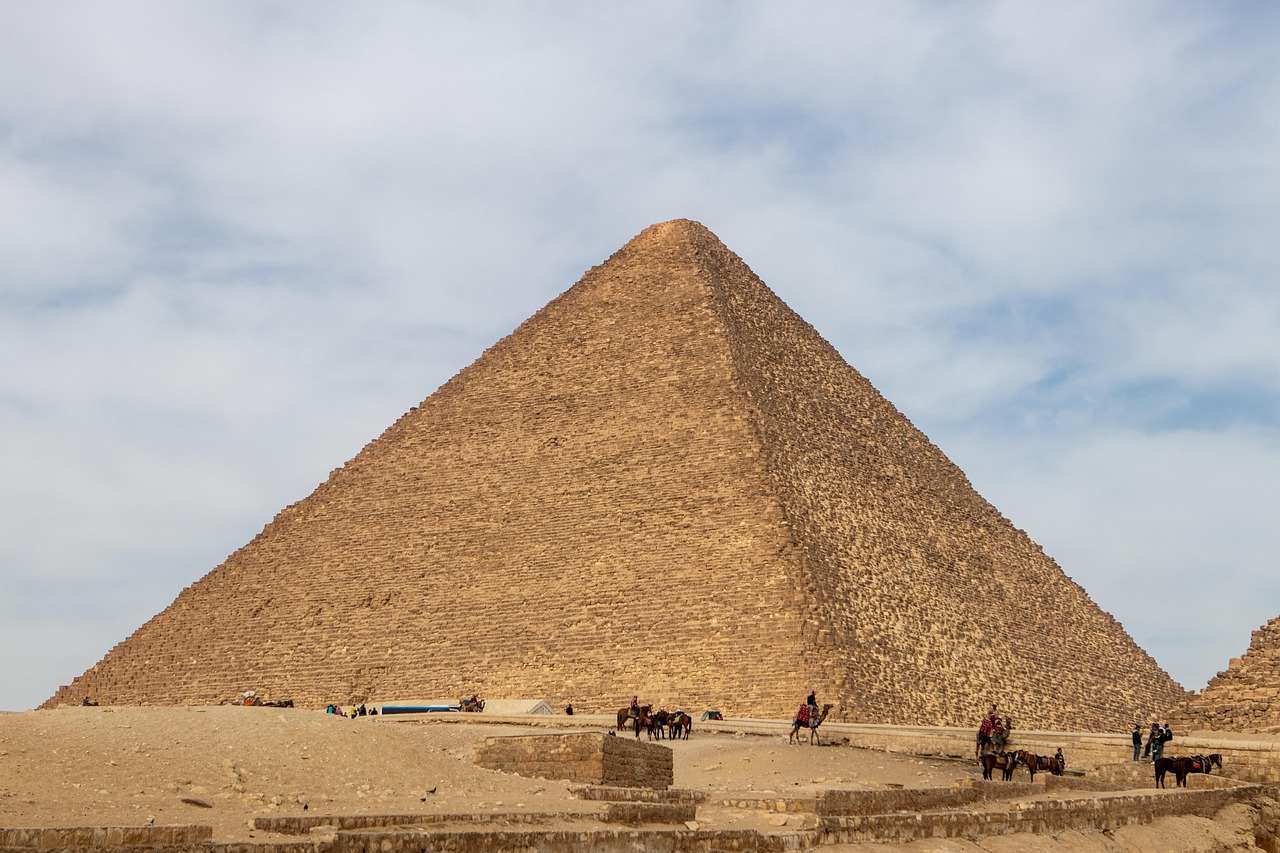
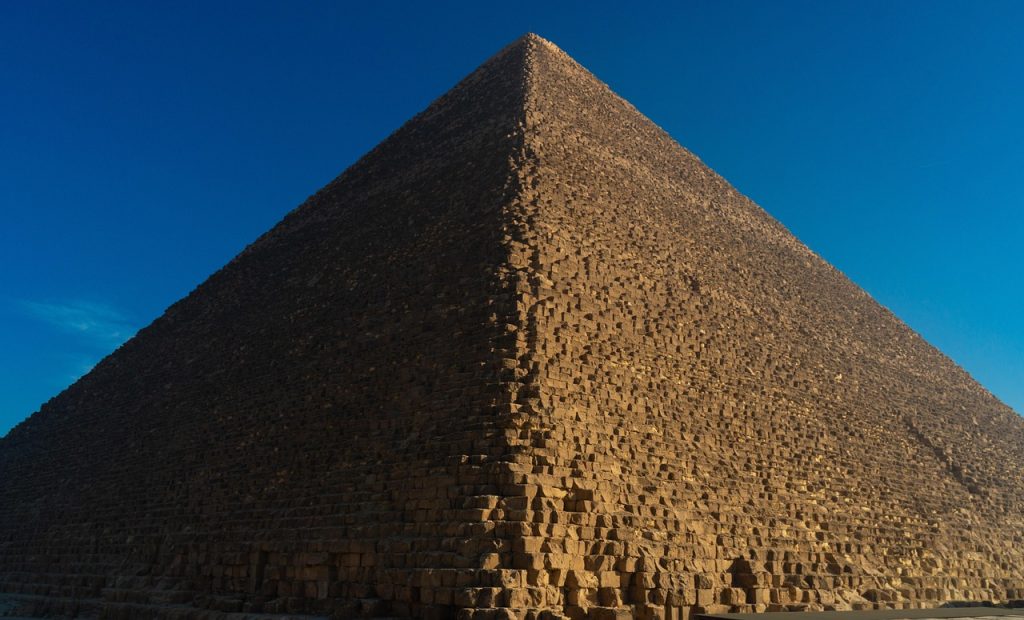
The Great Pyramid of Giza, built over 4,500 years ago, stands as a testament to the ingenuity, ambition, and precision of ancient Egyptian civilization. As the oldest and largest of the three pyramids in the Giza pyramid complex, it was originally 146.6 meters (481 feet) tall and is estimated to weigh approximately 6 million tons. For over 3,800 years, it was the tallest man-made structure on Earth, a record unbroken until the construction of Lincoln Cathedral in the 14th century.
But how was such a colossal structure built with primitive tools? What secrets does it hold within its limestone blocks? And why does it continue to fascinate and mystify us today? In this post, we’ll explore the history, construction theories, astronomical alignments, and unsolved mysteries of the Great Pyramid.
1. Historical Context: The Pyramid’s Purpose and Builders
The Great Pyramid was built during the Fourth Dynasty of Egypt (c. 2600–2500 BCE) under the reign of Pharaoh Khufu (Cheops in Greek). It served as his tomb, designed to protect his body and treasures for eternity while facilitating his journey to the afterlife.
- The Old Kingdom Era:
- The Old Kingdom period (c. 2686–2181 BCE) was the golden age of pyramid construction, marked by stability, prosperity, and centralized power.
- Pyramids were not just tombs but symbols of royal authority and divine connection, believed to help the pharaoh ascend to the gods after death.
Tip: Visit the Grand Egyptian Museum (GEM) in Cairo to see artifacts from Khufu’s reign.
- Who Built the Pyramid?
- For centuries, it was believed that the pyramids were built by slave labor, but modern evidence suggests they were constructed by skilled, well-fed Egyptian workers.
- Workers’ villages near Giza, such as Heit el-Ghurab, housed thousands of laborers who were paid in bread, beer, and housing.
- Skeletons of workers show signs of medical care and good nutrition, indicating they were valued and respected.
Tip: Explore the workers’ tombs near Giza to learn about their lives.
2. Construction Theories: How Was It Built?
The Great Pyramid’s construction remains one of the greatest engineering feats in history. Several theories attempt to explain how it was built, but no single method is universally accepted.
- Ramp Theories:
- Straight Ramp Theory: Proposes that a single, massive ramp was built to drag stones to the top. However, this would require more material than the pyramid itself and leave no archaeological evidence.
- Spiral Ramp Theory: Suggests an internal spiral ramp was used, allowing workers to drag blocks upward from inside. Evidence includes spiral patterns in the pyramid’s core and ancient depictions of internal ramps.
- Zigzagging External Ramp: Proposed by architect Jean-Pierre Houdin, this theory suggests a combination of internal and external ramps that zigzagged up the pyramid’s sides, reducing material needs.
Tip: Watch “The Pyramid Code” (documentary) to see Houdin’s theory in action.
- Lever and Counterweight Systems:
- Some researchers propose that levers and counterweights were used to lift and position the massive stone blocks.
- Ancient Egyptian art depicts workers using levers, but the scale required for the pyramid’s blocks (2.5–15 tons each) makes this theory controversial.
Tip: Visit the Egyptian Museum in Turin to see ancient tools and construction depictions.
- Water Shaft Theory:
- Proposed by engineer Robert Carson, this theory suggests that a system of water shafts and locks was used to float blocks upward using the Nile’s water.
- However, no evidence of such shafts has been found, and the logistics of flooding the Giza plateau remain unclear.
Tip: Explore alternative construction theories in books like “The Pyramids: An Enigma Solved” by Joseph Davidovits.
3. Astronomical Alignments: A Celestial Connection
The Great Pyramid is precisely aligned with celestial bodies, suggesting the ancient Egyptians possessed advanced astronomical knowledge.
- Alignment with True North:
- The pyramid is aligned with true north to within 0.05 degrees, a level of precision unmatched for millennia.
- This alignment was likely achieved using the stars Thuban (Alpha Draconis) and Mizar (Ursa Major), which were the North Pole stars during the pyramid’s construction.
Tip: Use astronomy software (e.g., Stellarium) to see how the night sky looked in 2500 BCE.
- The Orion Correlation Theory:
- Proposed by Robert Bauval and Adrian Gilbert, this theory suggests that the layout of the Giza pyramids mirrors the stars of Orion’s Belt.
- The air shafts of the Great Pyramid align with Orion and Sirius, supporting the idea that the pyramids were designed as a celestial map for the pharaoh’s soul to reach the afterlife.
Tip: Read “The Orion Mystery” by Robert Bauval to explore this theory.
- Solstice and Equinox Alignments:
- The pyramid’s descending and ascending passages align with the winter solstice and spring equinox, suggesting a ritual or astronomical purpose.
- Some researchers believe the pyramid was used as an ancient observatory to track celestial events and agricultural cycles.
Tip: Visit the Great Pyramid during the solstices to experience its astronomical alignments.
4. Unsolved Mysteries: What Lies Within?
Despite centuries of study, the Great Pyramid holds many unanswered questions:
- The Missing Capstone:
- The pyramid originally had a golden or electrum (gold-silver alloy) capstone, symbolizing the sun god Ra. This capstone is missing, possibly removed in antiquity or hidden within the pyramid.
- Some theories suggest it was stolen or repurposed, while others believe it remains buried in a secret chamber.
Tip: Explore ancient texts for clues about the capstone’s fate.
- Hidden Chambers and Void Spaces:
- In 2017, scientists using muon radiography discovered a large void (30 meters long) above the Grand Gallery. Its purpose remains unknown, with theories ranging from a hidden burial chamber to a structural feature.
- ScanPyramids project continues to explore these voids using non-invasive imaging techniques.
Tip: Follow the ScanPyramids project for updates on new discoveries.
- The Purpose of the Subterranean Chamber:
- Beneath the pyramid lies an unfinished subterranean chamber, its purpose unknown. Theories include a symbolic underworld for Khufu’s soul or an abandoned earlier version of the pyramid.
- The chamber’s rough, unfinished walls suggest it was never intended for public use.
Tip: Visit the subterranean chamber (if accessible) to see its mysterious construction.
- The “Air Shafts” Enigma:
- The pyramid contains four narrow shafts (two ascending, two descending) that align with celestial bodies. Their purpose is debated:
- Ventilation for the pharaoh’s soul to reach the afterlife.
- Astronomical alignment tools to track stars or solstices.
- Symbolic passages for the pharaoh’s spirit to travel to the heavens.
- In 1993, a robot (Upwaut II) explored the shafts and found a small door with copper handles, but its purpose remains unknown.
- The pyramid contains four narrow shafts (two ascending, two descending) that align with celestial bodies. Their purpose is debated:
Tip: Watch “The Pyramid’s Lost Chambers” (National Geographic documentary) to explore the shafts’ mysteries.
5. The Great Pyramid in Pop Culture and Modern Science
The Great Pyramid has captivated imaginations for millennia, inspiring art, literature, conspiracy theories, and scientific research.
- Ancient Aliens and Alternative Theories:
- Some pseudoarchaeological theories suggest the pyramid was built by extraterrestrials or lost civilizations (e.g., Atlantis). However, no credible evidence supports these claims.
- Erich von Däniken’s “Chariots of the Gods” popularized these ideas, but they are widely discredited by archaeologists.
Tip: Read “The Pyramids and the Sphinx” by Zahi Hawass for a scientifically grounded perspective.
- Modern Engineering and Architecture:
- The pyramid’s precision and durability have inspired modern engineering, including skyscrapers and megastructures.
- Example: The Burj Khalifa’s design was influenced by the pyramid’s aerodynamic shape, which helps it withstand wind and earthquakes.
Tip: Compare the Great Pyramid’s structure with modern megastructures like the Burj Khalifa or Three Gorges Dam.
- The Pyramid in Film and Literature:
- Films: The pyramid has been featured in movies like “The Mummy” (1999), “Stargate” (1994), and “Transformers: Revenge of the Fallen” (2009).
- Literature: Authors like H.P. Lovecraft (“The Nameless City”) and Agatha Christie (“Death Comes as the End”) have used the pyramid as a setting for mystery and horror.
Tip: Watch “The Pyramid” (2014 found-footage horror film) for a fictional take on its mysteries.
6. Visiting the Great Pyramid Today: A Traveler’s Guide
The Great Pyramid remains one of the most visited monuments in the world. Here’s how to make the most of your visit:
- Best Time to Visit:
- Early morning or late afternoon to avoid crowds and heat.
- Winter months (November–February) offer cooler temperatures and fewer tourists.
- Avoid Fridays and Sundays, when Egyptian sites are most crowded.
Tip: Book a sunrise or sunset camel ride for a breathtaking view of the pyramids.
- What to See Inside the Pyramid:
- The Grand Gallery: A 47-meter-long, 8.5-meter-high ascending corridor with corbelled walls, leading to the King’s Chamber.
- The King’s Chamber: Contains a granite sarcophagus (likely placed there during Khufu’s reign) and air shafts aligned with stars.
- The Queen’s Chamber: Misnamed (likely a serdab, or statue chamber), it contains two niches and air shafts aligned with Sirius.
- The Subterranean Chamber: An unfinished, rough-hewn chamber beneath the pyramid, possibly symbolic of the underworld.
Tip: Hire a licensed Egyptologist guide to explain the pyramid’s history and symbolism.
- Tips for Exploring Giza:
- Combine your visit with the Sphinx, Solar Boat Museum, and workers’ tombs for a full experience.
- Avoid touts offering “secret chamber tours”—these are scams and can damage the pyramid.
- Respect the site: Do not climb the pyramid (it’s illegal and dangerous) or touch the stones (oils from hands accelerate erosion).
Tip: Visit the Sound and Light Show at Giza for a dramatic nighttime experience.
A Monument to Human Ingenuity
The Great Pyramid of Giza is more than a tomb or a tourist attraction—it is a symbol of human ambition, precision, and mystery. Its construction techniques, astronomical alignments, and hidden chambers continue to fascinate scientists, historians, and visitors alike. As we uncover more of its secrets through modern technology, the pyramid reminds us that ancient civilizations were far more advanced than we often assume.
Whether you’re a history buff, an astronomy enthusiast, or simply a curious traveler, the Great Pyramid offers a glimpse into the past and a testament to the enduring power of human achievement.