
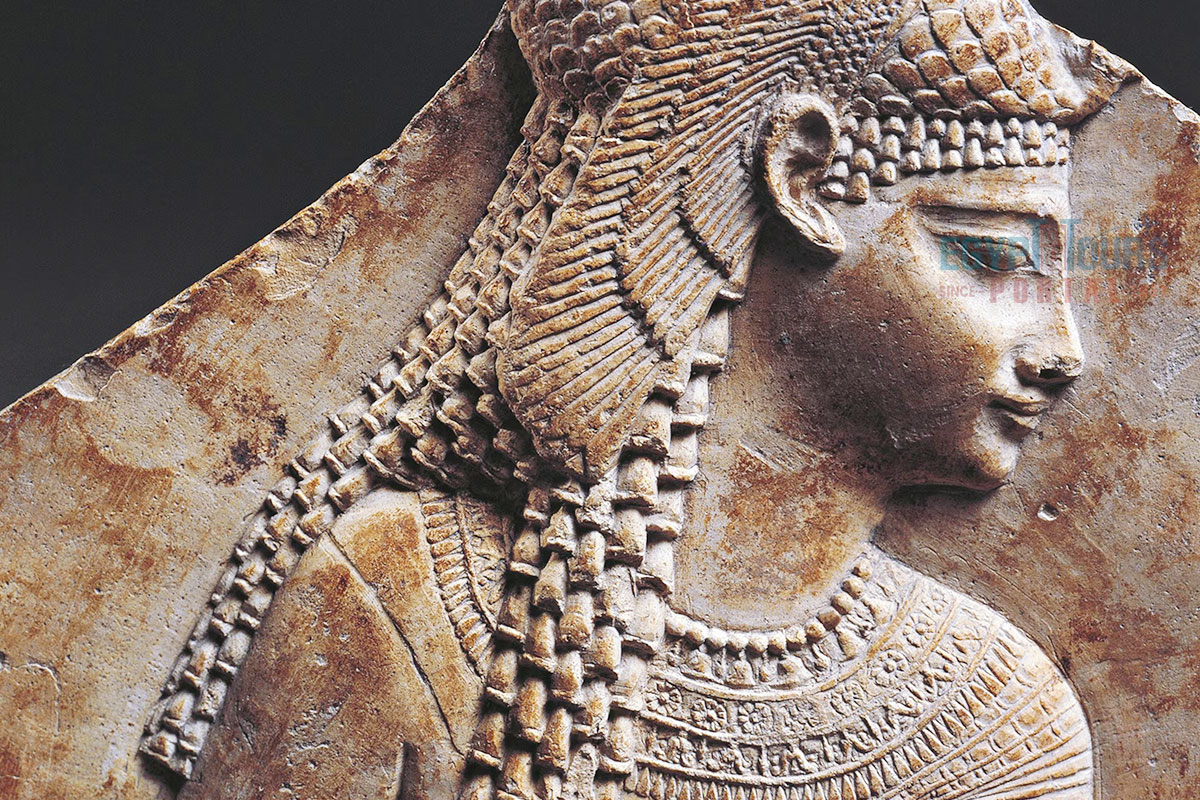
The Queen Who Captivated the World
Cleopatra VII Philopator, the last active ruler of the Ptolemaic Kingdom of Egypt, remains one of history’s most fascinating and misunderstood figures. Often reduced to a seductress or a tragic heroine in popular culture, Cleopatra was, in reality, a brilliant strategist, polyglot, and political mastermind who ruled during a turbulent period of Roman expansion. Her alliances with Julius Caesar and Mark Antony, her naval battle at Actium, and her dramatic suicide have cemented her place in history as a symbol of power, ambition, and resistance.
In this post, we’ll delve into Cleopatra’s early life, rise to power, political maneuvering, cultural impact, and the myths that surround her legacy.
1. Early Life and the Ptolemaic Dynasty
Cleopatra was born in 69 BCE into the Ptolemaic dynasty, a Greek-Macedonian royal family that ruled Egypt after the death of Alexander the Great. The Ptolemies embraced Egyptian culture and religion, presenting themselves as pharaohs to legitimize their rule.
- A Royal Education:
- Cleopatra was highly educated, fluent in Egyptian, Greek, and likely several other languages, including Hebrew and Aramaic.
- She was trained in philosophy, rhetoric, mathematics, and political strategy by tutors, including the philosopher Philostratus.
- Her intelligence and charisma set her apart from her siblings, who were often rival claimants to the throne.
Tip: Read “Cleopatra: A Life” by Stacy Schiff for a detailed account of her early years.
- A Dangerous Inheritance:
- Cleopatra’s father, Ptolemy XII Auletes, left Egypt in economic turmoil and political instability, heavily indebted to Rome.
- Upon his death in 51 BCE, Cleopatra, then 18 years old, and her 10-year-old brother Ptolemy XIII were installed as co-rulers, following Ptolemaic tradition.
- However, court advisors quickly sidelined Cleopatra, forcing her into exile while Ptolemy XIII ruled under their control.
Tip: Visit the Alexandria National Museum to see artifacts from Cleopatra’s reign.
2. Rise to Power: A Masterstroke of Political Strategy
Cleopatra’s return to power is a testament to her political acumen and ability to manipulate alliances.
- The Return from Exile:
- In 48 BCE, Cleopatra smuggled herself into Alexandria, wrapped in a carpet or a sack of laundry, to meet Julius Caesar, who was in Egypt pursuing her brother and rival, Ptolemy XIII.
- Caesar, impressed by her intelligence and ambition, agreed to restore her to the throne as co-ruler with another brother, Ptolemy XIV (whom she later had poisoned).
- This marked the beginning of her alliance with Rome, which she used to consolidate her power and protect Egypt’s sovereignty.
Tip: Watch “Cleopatra: Portrait of a Killer” (BBC documentary) to explore her political strategies.
- The Alexandrian War:
- Cleopatra aligned with Caesar during the Alexandrian War (48–47 BCE), where he defeated her brother’s forces.
- She charmed Caesar not just with her beauty, but with her intellect and knowledge of Egyptian wealth and resources.
- Their alliance produced a son, Caesarion (Ptolemy XV), whom Cleopatra claimed was Caesar’s heir—a dangerous assertion in Roman politics.
Tip: Read “Caesar and Cleopatra” by Alberto Angela for insights into their relationship.
- Consolidating Power:
- Cleopatra reformed Egypt’s economy, stabilizing the currency and trade, and reclaiming lost territories.
- She presented herself as the incarnation of the goddess Isis, linking her rule to divine authority and Egyptian tradition.
- Her coinage depicted her as Isis, and she participated in religious ceremonies to reinforce her legitimacy.
Tip: Explore Egyptian temples (e.g., Temple of Dendera) to see how Cleopatra used religion to strengthen her rule.
3. Cleopatra and Rome: Alliances with Caesar and Antony
Cleopatra’s relationships with Julius Caesar and Mark Antony were not just romantic liaisons but strategic political alliances that shaped the fate of Egypt and Rome.
- Julius Caesar (48–44 BCE):
- Caesar and Cleopatra’s relationship was both personal and political. She bore him a son, Caesarion, and he supported her rule, even bringing her to Rome, where she lived in a villa across the Tiber River.
- Her presence in Rome scandalized the Roman elite, who saw her as a foreign threat to Roman traditions.
- After Caesar’s assassination in 44 BCE, Cleopatra fled Rome and returned to Egypt, where she secured her position by eliminating rivals.
Tip: Visit the Temple of Venus Genetrix in Rome, where Cleopatra was said to have met Caesar.
- Mark Antony (41–30 BCE):
- Cleopatra formed a new alliance with Mark Antony, one of the triumvirs ruling Rome after Caesar’s death.
- Antony, needing funds and resources for his campaigns, turned to Cleopatra, who provided ships, troops, and wealth in exchange for political and military support.
- Their relationship was both passionate and pragmatic. They had three children together: Alexander Helios, Cleopatra Selene II, and Ptolemy Philadelphus.
- In 34 BCE, Antony granted lands to Cleopatra and their children, declaring Cleopatra the “Queen of Kings” and Caesarion the “King of Kings.” This provoked Rome, leading to war with Octavian (later Augustus)ubertrends.com.
Tip: Watch “Rome: Engineering an Empire” (History Channel) to see how Cleopatra’s alliances shaped Roman politics.
- The Donations of Alexandria:
- In a public ceremony in Alexandria (34 BCE), Antony distributed Roman territories to Cleopatra and their children, effectively carving out a new empire in the eastern Mediterranean.
- This act, along with Antony’s divorce from Octavian’s sister Octavia, was the final straw that led to war with Octavian.
Tip: Read “Antony and Cleopatra” by Adrian Goldsworthy for a military perspective on their alliance.
4. The Battle of Actium and the Fall of Egypt
Cleopatra’s reign ended in tragedy and defeat, marking the fall of the Ptolemaic dynasty and the rise of the Roman Empire.
- The Final War (32–30 BCE):
- Octavian declared war on Cleopatra (not Antony, to avoid civil war) and defeated their combined forces at the Battle of Actium (31 BCE).
- Cleopatra and Antony fled to Egypt, where Octavian pursued them. Antony, misled by false reports of Cleopatra’s death, fell on his sword.
- Cleopatra, realizing defeat was inevitable, chose to end her life rather than be paraded as a prisoner in Octavian’s triumph.
Tip: Visit the Actium battlefield in Greece to see where the decisive naval battle took place.
- The Death of Cleopatra:
- The manner of Cleopatra’s suicide has been debated for centuries. Plutarch claims she used an asp (Egyptian cobra), while others suggest poison.
- Her death symbolized the end of Egypt as an independent kingdom. Octavian executed Caesarion and annexed Egypt as a Roman province, ending the Ptolemaic dynasty after 300 years of rule.
Tip: Read “Cleopatra: The Life of an Egyptian Queen” by Michael Foss to explore theories about her death.
- The Aftermath:
- Octavian (Augustus) used Cleopatra’s defeat to consolidate his power in Rome, marking the beginning of the Roman Empire.
- Egypt became a breadbasket for Rome, its wealth and grain supplies fueling imperial expansion.
- Cleopatra’s children with Antony were spared and sent to Rome, where they were raised by Octavia, Antony’s ex-wife, in a remarkable act of mercy.
Tip: Explore the Temple of Caesar in Rome, where Octavian (Augustus) locked the doors after defeating Cleopatra and Antony.
5. Cleopatra’s Cultural and Historical Legacy
Cleopatra’s legacy extends far beyond her political and military defeats. She has been reimagined in art, literature, and film, often as a symbol of feminine power, seduction, and tragedy.
- Cleopatra in Ancient Sources:
- Ancient historians like Plutarch and Cassius Dio portrayed her as a manipulative seductress, emphasizing her beauty and charm over her political genius.
- However, Egyptian sources (e.g., the Temple of Dendera) depict her as a divine ruler and protector of Egypt, aligned with the goddess Isis.
- Her coinage and inscriptions show her as a pharaoh, wearing the traditional regalia of Egyptian kings.
Tip: Compare Roman and Egyptian depictions of Cleopatra to see how her image was shaped by bias.
- Cleopatra in Art and Literature:
- Shakespeare’s “Antony and Cleopatra” (1606) portrays her as a complex, passionate figure, torn between love and power.
- George Bernard Shaw’s “Caesar and Cleopatra” (1898) presents her as a shrewd politician who uses her wit to survive in a male-dominated world.
- Modern biographies (e.g., Stacy Schiff’s Cleopatra: A Life) reclaim her as a brilliant strategist rather than a mere seductress.
Tip: Watch the 1963 film “Cleopatra” starring Elizabeth Taylor to see Hollywood’s take on her story.
- Cleopatra in Film and Pop Culture:
- Theda Bara’s silent film “Cleopatra” (1917) was the first major cinematic portrayal, setting the tone for glamorous, fatalistic depictions.
- Elizabeth Taylor’s 1963 performance remains iconic, though criticized for historical inaccuracies.
- Recent portrayals (e.g., in “Rome” (2005–2007) and “Cleopatra in Space” (animated series)) have reimagined her as a multifaceted leader rather than a one-dimensional villain or victim.
- Beyoncé’s 2022 album “Renaissance” includes a song titled “Break My Soul,” which samples a 1970s disco track called “I’m a Slave for You” and references Cleopatra as a symbol of unapologetic power and resilience.
Tip: Listen to podcasts like “The History of Egypt” (by Egyptologist Garry J. Shaw) for expert insights on Cleopatra’s legacy.
6. Debunking Myths About Cleopatra
Cleopatra’s story has been distorted by myth and legend. Here are some common misconceptions and the truth behind them:
- Myth: Cleopatra Was Egyptian:
- Reality: Cleopatra was Greek-Macedonian, a descendant of Ptolemy I, a general of Alexander the Great. While she embraced Egyptian culture and presented herself as a pharaoh, she was not ethnically Egyptian.
- She was the first Ptolemaic ruler to learn Egyptian, which helped her connect with her subjects.
Tip: Explore the Ptolemaic family tree to see Cleopatra’s Greek heritage.
- Myth: Cleopatra’s Beauty Was Her Greatest Weapon:
- Reality: While ancient sources emphasize her charisma and beauty, Cleopatra’s **real power lay in her intelligence, political skill, and ability to navigate complex alliances.
- Coins and busts show her with strong, masculine features, suggesting she was respected for her mind, not just her appearance.
Tip: Visit the Berlin Egyptian Museum to see a realistic bust of Cleopatra.
- Myth: Cleopatra and Caesar Were Deeply in Love:
- Reality: Their relationship was primarily political. Caesar needed Egypt’s resources for his campaigns, and Cleopatra needed Roman protection to secure her throne.
- While there may have been genuine affection, their alliance was strategic, not romantic in the modern sense.
Tip: Read “Cleopatra and Rome” by Diana Preston to understand the political nature of their relationship.
- Myth: Cleopatra Committed Suicide Out of Love for Antony:
- Reality: Cleopatra’s suicide was a political act, not a romantic gesture. She refused to be paraded as a trophy in Octavian’s triumph, choosing death over humiliation.
- Her children with Antony were sent to Rome, where they were raised by Octavia, suggesting Octavian respected her lineage if not her actions.
Tip: Explore Roman triumphs (e.g., Trajan’s Column) to see how defeated enemies were displayed.
7. Visiting Cleopatra’s Egypt Today
For those fascinated by Cleopatra’s story, Egypt offers a wealth of sites connected to her life and reign:
- Alexandria:
- The Great Library of Alexandria (Bibliotheca Alexandrina): A modern revival of the ancient library, which Cleopatra likely frequented.
- Taposiris Magna: A temple dedicated to Isis and Osiris, where Cleopatra may have met Mark Antony.
- Kom el-Dikka: An ancient theater where Cleopatra may have addressed her subjects.
Tip: Take a guided tour of Alexandria’s Greco-Roman sites to walk in Cleopatra’s footsteps.
- Temple of Dendera:
- One of the best-preserved temples in Egypt, where Cleopatra presented herself as Isis’s incarnation.
- The Dendera Zodiac, a celestial map on the temple ceiling, reflects the Ptolemaic fascination with astrology.
Tip: Visit during the winter solstice to see how the temple aligns with the sun.
- Temple of Philae:
- Dedicated to Isis, this temple was one of the last bastions of ancient Egyptian religion before Christianity.
- Cleopatra used the cult of Isis to strengthen her rule and unify Egypt under her divine authority.
Tip: Take a Nile cruise to Philae to experience the temple’s isolated beauty.
- The Underwater City of Alexandria:
- Cleopatra’s Palace and the Antirhodos Island are now submerged due to earthquakes and rising sea levels.
- Underwater archaeology has revealed statues, columns, and artifacts from her reign, offering a glimpse into her world.
Tip: Watch “Cleopatra’s Lost City” (National Geographic documentary) to explore the underwater ruins.
Conclusion: The Queen Who Defied Rome
Cleopatra VII was far more than a seductress or a tragic heroine—she was a brilliant strategist, a polyglot diplomat, and a ruler who fought to preserve Egypt’s independence in the face of Roman domination. Her alliances with Caesar and Antony were not just affairs of the heart but calculated moves to protect her kingdom. Her tragic end marked the fall of the Ptolemaic dynasty but also the beginning of Egypt’s transformation under Roman rule.
Today, Cleopatra’s legacy endures in art, literature, and popular culture, where she is reimagined as a symbol of power, resilience, and feminine agency. By separating myth from reality, we can appreciate her as one of history’s most complex and compelling leaders—a queen who defied an empire and left an indelible mark on the world.