
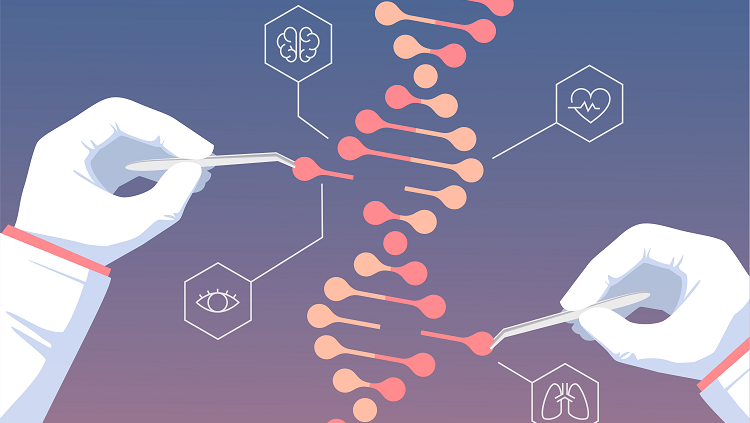
In 2012, scientists Emmanuelle Charpentier and Jennifer Doudna published a groundbreaking paper describing CRISPR-Cas9, a gene-editing tool derived from bacterial immune systems. This simple, precise, and affordable method for modifying DNA has transformed biology, enabling **cures for genetic diseases, engineered crops, and even the potential to erase hereditary disorders. Yet, CRISPR also raises profound ethical questions: Should we edit human embryos? Could we accidentally alter ecosystems? As CRISPR moves from labs to clinics, its promise and perils demand global conversation.
1. The Science Behind CRISPR
CRISPR (Clustered Regularly Interspaced Short Palindromic Repeats) is a natural defense mechanism in bacteria, repurposed as a gene-editing tool.
- How Bacteria Use CRISPR:
- Bacteria store snippets of viral DNA in their CRISPR arrays to recognize and destroy invading viruses.
- When a virus attacks, the bacteria produce RNA guides that direct Cas9 (a protein) to cut the viral DNA, neutralizing the threat.
- Adapting CRISPR for Gene Editing:
- Doudna and Charpentier realized that CRISPR-Cas9 could be programmed to target specific DNA sequences in any organism.
- By designing a custom RNA guide, scientists can direct Cas9 to cut DNA at precise locations, enabling insertions, deletions, or modifications.
- The CRISPR Toolkit:
- Cas9 acts as molecular scissors, cutting DNA at the target site.
- The cell’s repair machinery then fixes the break, either by joining the ends (knockout) or inserting new DNA (knock-in).
- Delivery methods (e.g., viral vectors, nanoparticles) transport CRISPR into target cells.
Tip: Watch “Human Nature” (2019 documentary) to see how CRISPR works in real-world applications.
2. Breakthrough Applications of CRISPR
Since its discovery, CRISPR has been applied to medicine, agriculture, and basic research, with stunning results.
- Medical Breakthroughs:
- Sickle Cell Disease and Beta-Thalassemia:
- CRISPR Therapeutics and Vertex Pharmaceuticals developed exa-cel (Casgevy), the first CRISPR-based therapy approved by the FDA (2023).
- It edits a faulty gene in blood stem cells, enabling patients to produce healthy hemoglobin.
- Clinical trials show >90% of patients are symptom-free after treatment.
- Cancer Immunotherapy:
- CRISPR is used to engineer T-cells to target and destroy cancer cells.
- CAR-T cell therapy (e.g., Kymriah) uses gene editing to enhance immune responses against leukemia and lymphoma.
- Hereditary Blindness (LCA10):
- Editas Medicine’s EDIT-101 uses CRISPR to correct a mutation causing Leber congenital amaurosis 10 (LCA10).
- Early trials show restored vision in some patients, offering hope for genetic eye diseases.
- Sickle Cell Disease and Beta-Thalassemia:
- Agricultural Innovations:
- Disease-Resistant Crops:
- CRISPR-edited wheat, rice, and cassava are resistant to pests, drought, and viruses.
- Non-browning mushrooms and longer-lasting tomatoes reduce food waste.
- Gene Drives for Pest Control:
- CRISPR gene drives spread sterility genes in mosquito populations, aiming to eliminate malaria.
- Field trials in Burkina Faso and Uganda show promising results, but ecological risks remain a concern.
- Hornless Cattle:
- Scientists used CRISPR to create hornless Holstein cattle, eliminating the need for painful dehorning.
- The FDA approved these cattle in 2022, marking the first CRISPR-edited animal in the U.S. food supply.
- Disease-Resistant Crops:
- Basic Research and Biotech:
- Gene Function Studies:
- CRISPR knockout screens help scientists identify gene functions by disabling them and observing effects.
- This has accelerated drug discovery and uncovered new biological pathways.
- De-extinction Attempts:
- Projects like Colossal Biosciences aim to revive the woolly mammoth using CRISPR to edit elephant DNA.
- Goals include restoring Arctic ecosystems and combating climate change.
- Antibiotic Resistance:
- CRISPR is used to study and combat antibiotic-resistant bacteria by targeting their resistance genes.
- CRISPR-antimicrobials could disable resistance mechanisms, making existing antibiotics effective again.
- Gene Function Studies:
Tip: Follow CRISPR Therapeutics and Editas Medicine for updates on gene-editing clinical trials.
3. Ethical Dilemmas and Controversies
CRISPR’s power to rewrite life’s code raises profound ethical, social, and ecological questions. From designer babies to ecological risks, the technology demands careful governance.
- Human Germline Editing:
- He Jiankui’s Experiment (2018):
- Chinese scientist He Jiankui used CRISPR to edit the CCR5 gene in human embryos, aiming to make them HIV-resistant.
- The twins (Lulu and Nana) were born in 2018, but the experiment was widely condemned for lacking oversight and consent.
- He was sentenced to prison for violating medical ethics, and the global scientific community called for a moratorium on germline editing.
- The WHO’s Stance:
- The World Health Organization (WHO) established a registry for human genome editing in 2019, urging transparency and ethical guidelines.
- Germline editing remains banned in most countries, but somatic editing (non-heritable) is permitted for therapeutic use.
- He Jiankui’s Experiment (2018):
- Designer Babies and Eugenics:
- CRISPR could enable parental selection of traits (e.g., intelligence, height, immunity), raising eugenics concerns.
- Bioethicists warn of a new era of inequality, where only the wealthy can afford enhancements.
- Regulatory frameworks (e.g., NIH guidelines, EU laws) aim to prevent misuse, but enforcement is challenging.
- Ecological Risks:
- Gene drives could spread uncontrollably in wild populations, disrupting ecosystems.
- CRISPR-edited mosquitoes in Brazil and Burkina Faso are monitored closely to prevent unintended consequences.
- Ecologists advocate for containment protocols and risk assessments before release.
- Intellectual Property and Access:
- Patent battles (e.g., Broad Institute vs. UC Berkeley) over CRISPR limit access for smaller labs and developing nations.
- Open-source CRISPR tools (e.g., Addgene’s plasmid repository) aim to democratize the technology.
- Global inequities persist, with wealthy nations dominating CRISPR research and applications.
Tip: Read “The CRISPR Generation” by Kirkus Reviews to explore ethical debates in gene editing.
4. The Future of CRISPR: Possibilities and Precautions
CRISPR is still in its early stages, with new variants (e.g., CRISPR-Cas13 for RNA editing) and delivery methods (e.g., lipid nanoparticles) expanding its potential and risks.
- Next-Generation CRISPR Tools:
- Prime Editing (2019): A more precise method that edits DNA without cutting both strands, reducing off-target effects.
- CRISPR-Cas13: Targets RNA instead of DNA, enabling temporary gene regulation for therapeutic uses.
- Epigenome Editing: Modifies gene expression without altering DNA, offering reversible treatments for diseases.
- Clinical Trials and Therapies:
- >30 CRISPR-based therapies are in clinical trials for blood disorders, cancer, and eye diseases.
- The first in-human trial (2016) treated a patient with sickle cell disease; by 2024, dozens of trials are underway.
- FDA and EMA approvals are accelerating, with exa-cel (2023) leading the way.
- Agricultural and Environmental Applications:
- CRISPR crops (e.g., drought-resistant maize, non-browning apples) are entering markets.
- Gene-drive mosquitoes are being tested in contained environments to assess ecological impacts.
- Bioengineered materials (e.g., spider silk, lab-grown meat) use CRISPR to enhance properties.
- Global Governance and Public Engagement:
- WHO’s global registry tracks human genome editing research to ensure transparency.
- Public engagement initiatives (e.g., CRISPRcon conferences) foster dialogue on ethical use.
- National academies (e.g., U.S. NAS, UK’s Royal Society) provide policy recommendations to balance innovation and safety.
Tip: Attend a CRISPRcon event (e.g., CRISPRcon.org) to join global discussions on gene editing.
Conclusion: A Tool of Immense Power and Responsibility
CRISPR-Cas9 is one of the most transformative technologies of the 21st century, offering unprecedented control over life’s code. From curing genetic diseases to engineering ecosystems, its applications are vast—but so are its ethical and ecological risks. As CRISPR moves from labs to real-world use, global cooperation, transparent governance, and public engagement will determine whether it heals or harms humanity. The story of CRISPR is still being written, and its final chapters will depend on how we choose to wield its power.