The Admiral Who Sailed the World
Long before Columbus, da Gama, or Magellan set sail, a Chinese Muslim eunuch admiral named Zheng He (1371–1433 or 1435) commanded the largest and most advanced fleet the world had ever seen. Between 1405 and 1433, Zheng He led seven monumental voyages that took his armada of “treasure ships” across the Indian Ocean, reaching as far as East Africa, the Persian Gulf, and possibly the Americas.
His expeditions were unparalleled in scale and ambition, carrying thousands of sailors, diplomats, and merchants on ships four times the size of Columbus’s Santa María. Yet, despite their groundbreaking achievements, Zheng He’s voyages were abruptly halted, and China turned inward, leaving the Age of Exploration to Europe.
In this post, we’ll explore the life of Zheng He, the magnificence of his voyages, the cultures he encountered, and the mysteries surrounding their sudden end.
1. The Life of Zheng He: From Captive to Admiral
Zheng He’s rise from humble beginnings to imperial admiral is a story of resilience, loyalty, and ambition.
- Early Life and Capture:
- Born Ma He in Yunnan Province in 1371, Zheng He was a Muslim from a persianized Chinese family (his great-great-grandfather was Sayyid Ajall Shams al-Din, a governor of Yunnan under the Mongol Yuan Dynasty).
- At age 10, he was captured by Ming forces during their conquest of Yunnan and castrated, becoming a eunuch in the service of the Ming court.
- He was renamed Zheng He (“He” meaning “harmony”) by the Yongle Emperor, who trusted him implicitly and elevated him to grand eunuch and admiral.
Tip: Visit Yunnan Province to see the cultural blend of Chinese and Islamic influences that shaped Zheng He’s early life.
- Rise in the Ming Court:
- Zheng He proved his loyalty to the Yongle Emperor (Zhu Di) by helping him seize the throne from his nephew in the Jingnan Campaign (1399–1402).
- He was appointed admiral and tasked with building the Treasure Fleet, a massive naval force designed to project Ming power and expand trade.
- His Muslim faith and multilingual skills (he spoke Arabic, Persian, and Chinese) made him an ideal diplomat for the Ming court’s global ambitions.
Tip: Explore the Forbidden City in Beijing, where Zheng He served the Yongle Emperor.
- The Treasure Fleet:
- Zheng He oversaw the construction of over 300 ships, including 62 “treasure ships” (Bao Chuan) that were 400 feet long and 160 feet wide—dwarfing European vessels of the time.
- The ships were equipped with advanced navigation tools, including compasses, star charts, and water-tight compartments.
- The fleet carried thousands of sailors, soldiers, merchants, and diplomats, as well as gifts for foreign rulers, including silk, porcelain, and gold.
Tip: See a replica of a treasure ship at the Zheng He Maritime Museum in Nanjing.
2. The Seven Voyages: A Global Expedition
Zheng He’s seven voyages (1405–1433) were unprecedented in scale and scope, reaching distant lands and establishing China as a global power.
- First Voyage (1405–1407):
- Destination: Champa (Vietnam), Java, Sumatra, Ceylon (Sri Lanka), and Calicut (India).
- Purpose: To display Ming power, establish trade routes, and seek exotic goods (e.g., pepper, spices, gems).
- Zheng He defeated the pirate Chen Zuyi in Sumatra, securing safe passage for Chinese merchants.
- He erected a stele in Ceylon (Sri Lanka) with a trilingual inscription (Chinese, Tamil, and Persian) praising the Buddha, Allah, and the Ming Emperor—a symbol of religious tolerance.
Tip: Visit the Galle Maritime Museum in Sri Lanka to see artifacts from Zheng He’s voyages.
- Second Voyage (1407–1409):
- Destination: Calicut (India), Cochin, and the Maldives.
- Purpose: To expand trade and establish tributary relationships with local rulers.
- Zheng He intervened in a local conflict in Calicut, helping the King of Cochin against his rival, the Zamorin of Calicut.
- He brought back a giraffe from Malindi (East Africa), which was presented as a “qilin” (a mythical Chinese creature) to the Ming court.
Tip: Explore Calicut’s history at the Kozhikode Beach and Vasco da Gama’s landing site.
- Third Voyage (1409–1411):
- Destination: Hormuz (Persian Gulf), Aden, and Mogadishu (Somalia).
- Purpose: To extend Ming influence into the Persian Gulf and East Africa.
- Zheng He defeated the Chen Zuyi’s remnants in Sumatra and secured tribute from Malacca (Malaysia).
- He returned with envoys from Mecca and other African kingdoms, as well as exotic animals (e.g., ostriches, zebras) for the Ming zoo in Nanjing.
Tip: Visit Mogadishu’s old port to see where Zheng He’s ships may have docked.
- Fourth Voyage (1413–1415):
- Destination: **Hormuz, Aden, Malindi (Kenya), and possibly the Red Sea.
- Purpose: To consolidate Ming trade networks and explore new routes to the Middle East and Africa.
- Zheng He established a Ming presence in East Africa, including a Chinese community in Malindi.
- He brought back envoys from Mecca and Yemen, as well as African gold and ivory for the Ming court.
Tip: Explore Swahili culture in Malindi and Mombasa to see the Chinese influence from Zheng He’s voyages.
- Fifth Voyage (1417–1419):
- Destination: **Hormuz, Aden, Malindi, and the coast of Arabia.
- Purpose: To escort foreign envoys back to China and reinforce Ming authority in the Indian Ocean.
- Zheng He visited Mecca (though he did not enter the city as a non-Muslim), where he was gifted with Islamic relics by the Sharif of Mecca.
- He returned with a “qilin” (giraffe) for the Ming emperor, which was seen as a sign of divine favor.
Tip: Read “When China Ruled the Seas” by Louise Levathes for details on the fifth voyage.
- Sixth Voyage (1421–1422):
- Destination: **Sumatra, Malacca, and the Andaman Sea.
- Purpose: To reassert Ming control after a hiatus due to the Yongle Emperor’s death in 1424.
- Zheng He repaired relations with Sumatra and Malacca, which had rebelled during the hiatus.
- He brought back tribute from Ceylon, Cochin, and Calicut, including pepper, cinnamon, and precious stones.
Tip: Visit Malacca’s Sultanate Palace Museum to see the Malay-Chinese cultural exchange from Zheng He’s time.
- Seventh Voyage (1431–1433):
- Destination: **Calicut, Hormuz, and possibly the Red Sea or East Africa.
- Purpose: The final and most controversial voyage, as some believe it reached the Americas before Columbus.
- Zheng He died during the voyage (possibly in Calicut or Hormuz), and his fleet returned to China without him.
- His death marked the end of China’s age of naval exploration, as the Ming court shifted focus inward under the Xuande Emperor.
Tip: Explore theories about Zheng He’s death in “Zheng He: China and the Oceans in the Early Ming Dynasty, 1405–1433” by Edward L. Dreyer.
3. The Ships of the Treasure Fleet: Engineering Marvels
Zheng He’s treasure ships (Bao Chuan) were the largest and most advanced vessels of their time, dwarfing European ships for centuries.
- Design and Size:
- The treasure ships were 400 feet long and 160 feet wide, with nine masts and sails of woven bamboo.
- They had water-tight bulkheads, multiple decks, and stabilizing fins to prevent capsizing.
- Each ship could carry up to 1,000 people, along with cargo, livestock, and fresh water for long voyages.
- Smaller ships included horse ships (for cavalry),, supply ships, and war junks for combat.
Tip: See a scale model of a treasure ship at the Nanjing Maritime Museum.
- Navigation and Technology:
- Zheng He’s fleet used advanced navigation tools, including:
- Magnetic compasses (invented in China centuries earlier).
- Star charts and astrolabes for celestial navigation.
- Water-tight compartments to prevent sinking.
- Gunpowder weapons (though primarily for signaling and defense).
- The ships were self-sufficient, carrying freshwater wells, livestock, and gardens to prevent scurvy and sustain crews on long voyages.
- Zheng He’s fleet used advanced navigation tools, including:
Tip: Explore ancient Chinese navigation tools at the Shanghai Science and Technology Museum.
- Crew and Cargo:
- The fleet carried thousands of sailors, soldiers, merchants, and diplomats, as well as interpreters, doctors, and astronomers.
- Cargo included silk, porcelain, tea, and lacquerware for trade, as well as gifts for foreign rulers (e.g., gold, silver, and jade).
- Exotic goods brought back included pepper, spices, ivory, rhinoceros horn, and giraffes (mistaken for “qilin”).
- The voyages established Chinese trade dominance in the Indian Ocean for decades.
Tip: Visit the Forbidden City’s Treasure Gallery to see Ming-era gifts from foreign lands.
4. Cultural Exchange: Diplomacy and Trade
Zheng He’s voyages were not just about conquest—they were diplomatic and commercial missions that expanded China’s global influence.
- Diplomacy and Tribute:
- Zheng He carried letters and gifts from the Ming emperor to foreign rulers, establishing tributary relationships.
- He brought back envoys from over 30 kingdoms, including Malacca, Ceylon, Calicut, Hormuz, and Malindi.
- The Ming court received exotic tribute, including giraffes, zebras, and ostriches, which were displayed in the imperial zoo in Nanjing.
- Zheng He’s multilingual skills (he spoke Arabic, Persian, and Chinese) made him an ideal envoy for the Ming court.
Tip: Explore Ming-era tributary records at the First Historical Archives of China in Beijing.
- Trade and Commerce:
- The voyages expanded China’s trade networks, connecting it to Africa, the Middle East, and South Asia.
- Chinese silk, porcelain, and tea were exchanged for pepper, spices, ivory, and gems.
- The port of Calicut became a major hub for Chinese merchants, who established trading posts along the Malabar Coast.
- Zheng He’s voyages preceded European exploration by decades, but China abandoned its naval ambitions shortly after his death.
Tip: Visit Calicut’s spice markets to see the legacy of Zheng He’s trade.
- Cultural and Scientific Exchange:
- Zheng He’s fleet brought back knowledge of foreign cultures, religions, and technologies.
- He introduced African and Arab astronomical knowledge to China, improving navigation techniques.
- The Ming court received Islamic scholars, who shared advances in medicine, astronomy, and mathematics.
- Zheng He’s voyages spread Chinese culture, including porcelain-making and silk production, to Southeast Asia and Africa.
Tip: Explore Chinese porcelain in Southeast Asian museums to see the cultural exchange from Zheng He’s time.
- The “Qilin” Incident:
- In 1414, Zheng He brought a giraffe from Malindi (East Africa) to the Ming court, presenting it as a “qilin” (a mythical creature in Chinese folklore).
- The qilin was seen as a sign of divine favor and prosperity, reinforcing the legitimacy of the Yongle Emperor.
- The giraffe was depicted in Ming art and records, symbolizing the global reach of Zheng He’s voyages.
Tip: See the “qilin” giraffe in Ming-era paintings at the Palace Museum in Beijing.
5. The Mysteries of Zheng He’s Voyages
Despite their historical significance, Zheng He’s voyages remain shrouded in mystery, with unanswered questions that continue to intrigue historians.
- Did Zheng He Reach the Americas?
- Some controversial theories suggest that Zheng He’s fleet reached the Americas in 1421, 70 years before Columbus.
- The 1421 Theory, proposed by Gavin Menzies in his book “1421: The Year China Discovered America”, claims that Zheng He’s maps show the Americas and that his fleet circumnavigated the globe.
- However, most historians reject this theory, citing lack of definitive evidence and Menzies’ controversial methods.
- Chinese records from the time do not mention the Americas, and no archaeological evidence supports the claim.
- The Kunyu Wangguo Quantu (1389), a Ming-era world map, does not show the Americas, though it does depict Africa and Europe in detail.
Tip: Read “1421: The Year China Discovered America” by Gavin Menzies to explore the controversial theory.
- Why Did the Voyages Stop?
- After Zheng He’s death in 1433, the Ming court abruptly halted the voyages.
- The Xuande Emperor (1425–1435) shifted focus to land-based expansion and Confucian governance, seeing the voyages as a waste of resources.
- The Oirat Mongols were threatening China’s northern borders, requiring military attention.
- The eunuch faction at court lost influence after the Yongle Emperor’s death, and Zheng He’s successors lacked his vision and ambition.
- The ships were left to rot, and records of the voyages were destroyed or lost, leaving a gap in our understanding of this era.
Tip: Explore the political shifts in the Ming court after 1433 in “The Cambridge History of China”.
- The Burning of the Records:
- After Zheng He’s death, the Ming court ordered the destruction of most records of his voyages.
- The official history of the Ming Dynasty (Ming Shilu) omits details of the voyages, focusing instead on land-based achievements.
- Only fragmentary records survive, including the accounts of Ma Huan (a translator on the voyages) and fei Xin (a soldier who wrote “The Overall Survey of the Ocean’s Shores”).
- The lack of records has led to speculation and myth, including exaggerated claims of Zheng He’s achievements.
Tip: Read “The Overall Survey of the Ocean’s Shores” (translated by J.V.G. Mills) for a firsthand account of the voyages.
- The Fate of the Treasure Fleet:
- The treasure ships were abandoned in Nanjing’s harbor, where they rotted and sank.
- In the 1980s and 2000s, excavations in Nanjing uncovered remnants of the ships, including rudders and anchors.
- The Nanjing Maritime Museum now houses a replica of a treasure ship, built based on historical records and archaeological findings.
Tip: Visit the Nanjing Maritime Museum to see the excavated remnants of Zheng He’s ships.
6. Zheng He’s Legacy: China’s Lost Age of Exploration
Zheng He’s voyages expanded China’s global influence and reshaped trade networks, yet their abrupt end remains one of history’s great “what ifs.”
- China’s Turn Inward:
- After 1433, China withdrew from naval exploration, focusing instead on land-based expansion and internal stability.
- The Ming Dynasty became increasingly isolationist, restricting foreign trade and contact.
- By the time European explorers reached Asia in the late 15th century, China was no longer a naval power, and the Age of Exploration was dominated by Portugal, Spain, and the Netherlands.
Tip: Compare China’s withdrawal with Europe’s Age of Exploration in “The Penguin History of the World”.
- Impact on Global Trade:
- Zheng He’s voyages established Chinese trade dominance in the Indian Ocean for decades.
- The port of Calicut became a major hub for Chinese merchants, who traded silk, porcelain, and tea for pepper, spices, and gems.
- The Malacca Sultanate became a key ally of China, and Chinese communities were established in Southeast Asia and East Africa.
- The decline of Chinese naval power after 1433 allowed European powers to dominate global trade by the 16th century.
Tip: Explore Calicut’s history as a trading post in “The City of Blue Gods” by Manju Kapur.
- Cultural Exchange and Misunderstandings:
- Zheng He’s voyages spread Chinese culture, including porcelain-making and silk production, to Southeast Asia and Africa.
- The “qilin” giraffe brought from Africa symbolized the cultural exchange between China and the Swahili Coast.
- However, misunderstandings persisted. European maps from the 16th century often confused China with India, and Zheng He’s achievements were largely forgotten in the West until modern rediscoveries in the 20th century].
Tip: Explore Swahili-Chinese cultural exchange in “The Swahili World” by Stephanie Wynne-Jones.
- Modern Rediscovery:
- Zheng He was largely forgotten in China and the West until the 20th century, when historians and archaeologists began to uncover his legacy.
- The 1980s excavations in Nanjing revealed the remnants of his treasure ships, sparking renewed interest.
- In 2005, China celebrated the 600th anniversary of Zheng He’s first voyage, rebuilding a treasure ship and honoring his legacy.
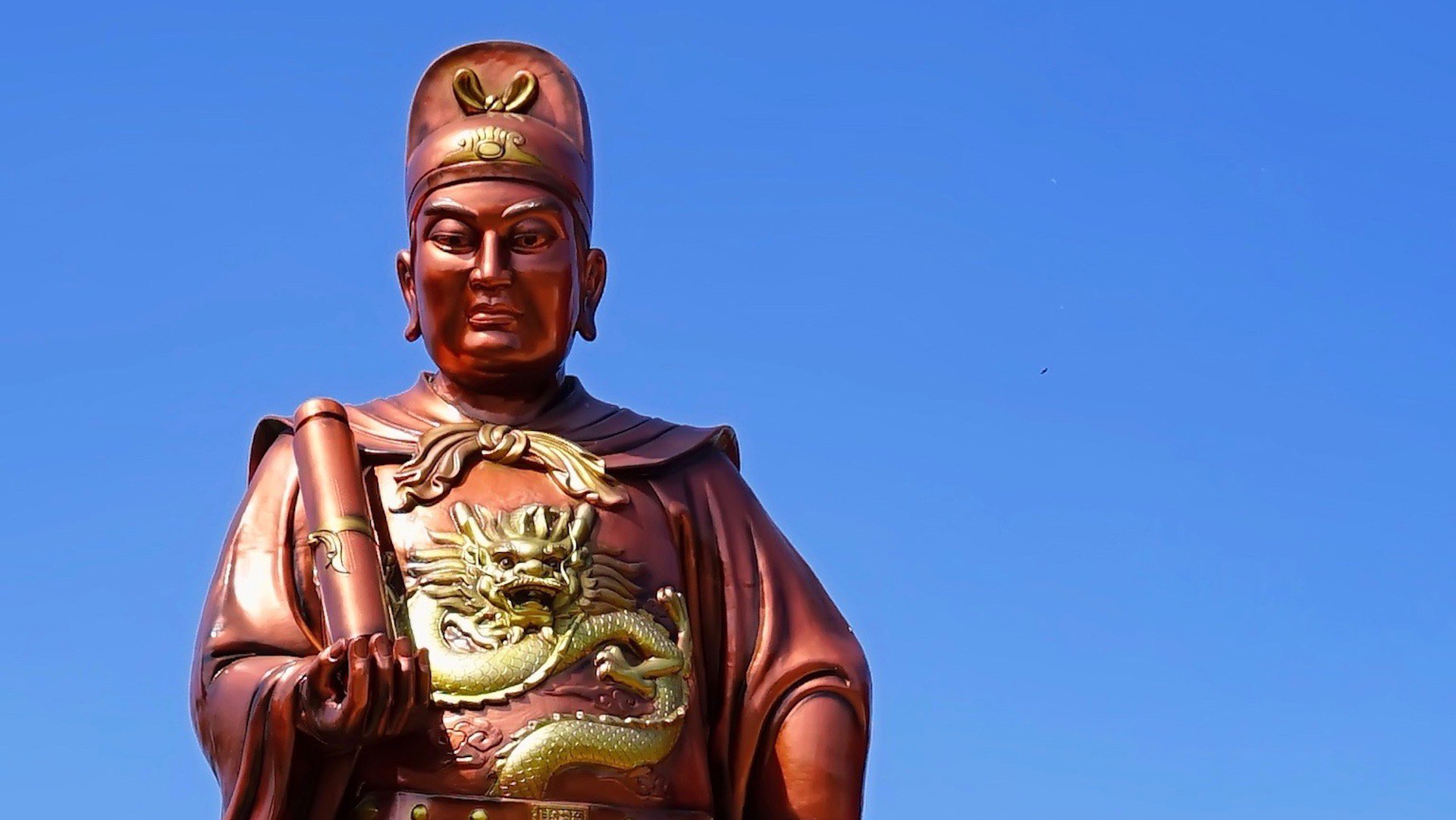
- Today, Zheng He is celebrated as a national hero in China, with statues, museums, and documentaries dedicated to his life.
- His voyages are taught in Chinese schools as a symbol of China’s historical global influence and peaceful exploration[11].
Tip: Watch “The Great Voyage of Zheng He” (2005 documentary) to see modern China’s celebration of his legacy.
7. Zheng He in Modern Culture and Memory
Zheng He’s voyages have inspired books, films, and games, blending history with legend.
- Books and Documentaries:
- “When China Ruled the Seas” by Louise Levathes (1996) is the definitive history of Zheng He’s voyages.
- “Zheng He: China and the Oceans in the Early Ming Dynasty” by Edward L. Dreyer (2007) offers a detailed academic study of his life and expeditions.
- “1421: The Year China Discovered America” by Gavin Menzies (2002) presents the controversial theory that Zheng He reached the Americas.
- “The Dragon’s Gift: The Sacred Arts of Bhutan” by John C. Huntington explores the cultural exchange between China and Asia during Zheng He’s time.
- “The Great Voyage of Zheng He” (2005 documentary) reconstructs his voyages using historical records and archaeological evidence.
- “China’s Great Armada” (2014 BBC documentary) examines the scale of Zheng He’s fleet and its global impact[4].
Tip: Read “When China Ruled the Seas” for a comprehensive overview of Zheng He’s achievements.
- Film and Television:
- “The Adventures of Zheng He” (2009 animated series) follows his voyages in a family-friendly format.
- “Zheng He’s Treasure Fleet” (2010 documentary) explores the archaeological evidence of his ships.
- “The Mysterious Cities of Gold” (2013) investigates the legends of Zheng He’s voyages to the Americas.
- “Marco Polo” (2014 Netflix series) features Zheng He as a character, blending history with fiction[11].
Tip: Watch “The Adventures of Zheng He” to introduce children to his story.
- Video Games:
- “Civilization VI” allows players to lead China under Zheng He, exploring and trading across the Indian Ocean.
- “Europa Universalis IV” includes Zheng He’s voyages as a diplomatic and trade event.
- “Age of Empires II: Definitive Edition” features a campaign based on Zheng He’s expeditions.
- “Crusader Kings III” allows players to simulate Zheng He’s voyages and establish trade networks[12].
Tip: Play “Civilization VI” as China to recreate Zheng He’s global expeditions.
8. Visiting Zheng He’s China Today: A Traveler’s Guide
For those fascinated by Zheng He’s legacy, China offers a wealth of sites connected to his life and voyages:
- Nanjing:
- Zheng He Maritime Museum: Features a full-scale replica of a treasure ship, as well as artifacts and maps from his voyages.
- Xuanwu Lake: Where the remnants of Zheng He’s ships were discovered in the 1980s.
- Ming Xiaoling Mausoleum: The tomb of the Yongle Emperor, who sent Zheng He on his voyages.
- Confucius Temple: A symbol of the Confucian values that later supplanted Zheng He’s naval ambitions[4].
Tip: Take a boat tour of Xuanwu Lake to see where Zheng He’s ships were excavated.
- Beijing:
- Forbidden City: Where Zheng He served the Yongle Emperor and planned his voyages.
- Temple of Heaven: Built during the Yongle Emperor’s reign, it symbolizes the cosmic order that Zheng He’s voyages sought to extend.
- National Museum of China: Houses artifacts and maps from the Ming Dynasty, including those from Zheng He’s expeditions.
- Beihai Park: Features a statue of Zheng He and a replica of a treasure ship[11].
Tip: Visit the Forbidden City’s Treasure Gallery to see gifts from foreign lands brought back by Zheng He.
- Quanzhou (Fujian Province):
- Maritime Museum: Displays models of Zheng He’s ships and artifacts from his voyages.
- Kaiyuan Temple: A 1,000-year-old mosque that Zheng He visited and restored during his voyages.
- Quanzhou Port: One of the main departure points for Zheng He’s fleet, now a historic trading port[12].
Tip: Explore Quanzhou’s Islamic heritage, influenced by Zheng He’s faith.
- Liujiagang (Jiangsu Province):
- Zheng He Memorial Park: Features a statue of Zheng He and a museum dedicated to his life.
- Liujiagang Shipyard: Where some of Zheng He’s ships were built, now a historic site[4].
Tip: Visit the Zheng He Memorial Park to see the statue and museum dedicated to his legacy.
- Malacca (Malaysia):
- Malacca Sultanate Palace Museum: Explores the Chinese-Malay cultural exchange from Zheng He’s time.
- Bukit China: A historic Chinese settlement in Malacca, established during Zheng He’s voyages.
- Jonker Walk: A street of Chinese shophouses built by Ming-era merchants[11].
Tip: Try Nyonya cuisine in Malacca, a blend of Chinese and Malay flavors from Zheng He’s era.
- Calicut (Kozhikode, India):
- Kozhikode Beach: Where Zheng He’s fleet docked and established trade.
- Vasco da Gama’s Landing Site: A monument marks where the Portuguese explorer arrived in 1498, decades after Zheng He.
- Spice Markets: Still trade in the spices (pepper, cardamom, cinnamon) that Zheng He sought for China[12].
Tip: Visit the Kappad Plaza to see Calicut’s historic spice trade.
The Admiral Who Could Have Changed the World
Zheng He’s voyages were a testament to human ambition, cultural exchange, and the power of exploration. His treasure ships were marvels of engineering, his diplomacy expanded China’s global influence, and his legacy continues to inspire modern explorers and historians.
Yet, the abrupt end of his voyages remains one of history’s great mysteries. Had China continued its naval exploration, the Age of Exploration might have been dominated by Asian powers rather than Europe. Instead, Zheng He’s achievements were largely forgotten, and China turned inward, leaving the oceans to others.
Today, as we rediscover his legacy, Zheng He stands as a symbol of what might have been—a world where East and West met on equal terms, where trade and diplomacy triumphed over conquest, and where human curiosity knew no bounds.