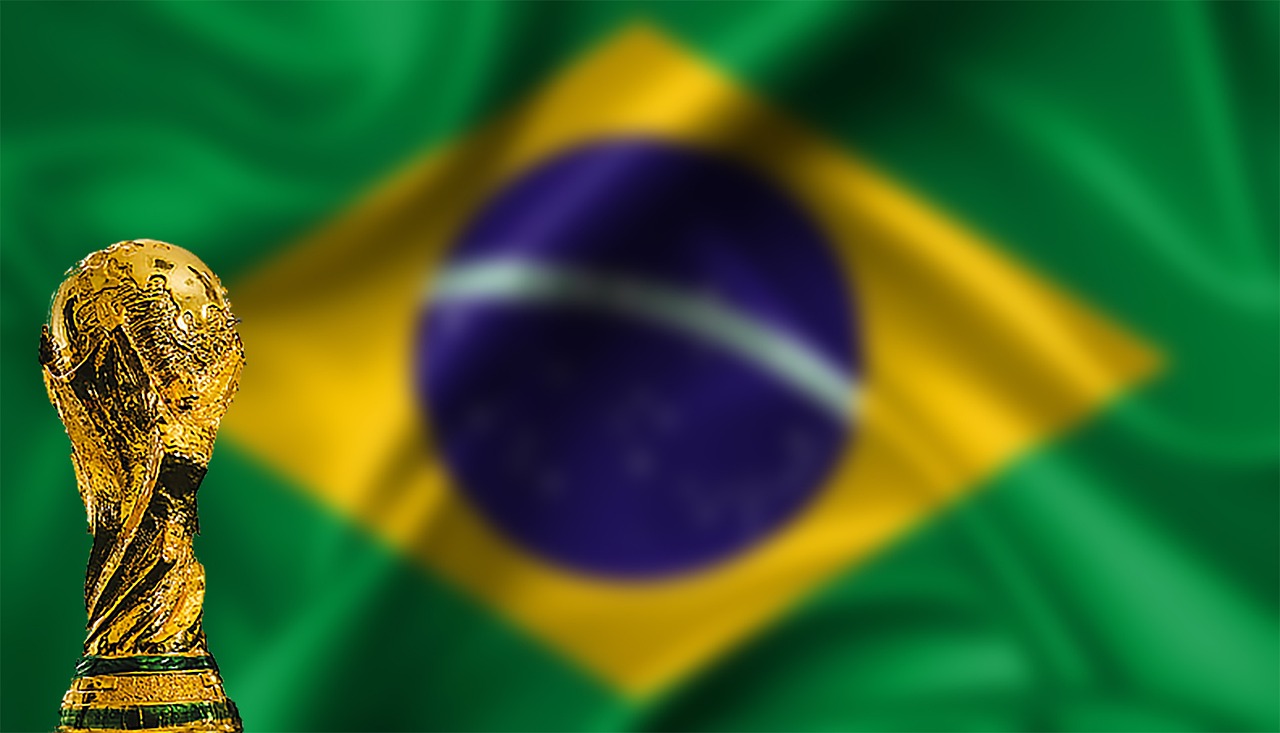
Brazil is synonymous with football. Known for its samba-style play, flair, and creativity, the Brazilian national team has captivated the world for decades. With a record five World Cup titles and a legacy of producing some of the greatest players in history, Brazil’s football team is a symbol of excellence and passion.
In this post, we’ll dive into the history, iconic moments, legendary players, and cultural impact of the Brazilian national team.
1. The Birth of Brazilian Football
Football was introduced to Brazil in the late 19th century by British immigrants and sailors. The sport quickly became a national obsession, reflecting the country’s diverse culture, rhythm, and joy.
- Early Years:
- The Brazilian Football Confederation (CBF) was founded in 1914, and the national team played its first official match in 1914 against Exeter City, an English club, winning 2-0.
- Brazil’s first major international tournament was the 1916 South American Championship (now Copa América), where they finished third.
Tip: Visit the Museu do Futebol (Football Museum) in São Paulo to explore Brazil’s early football history.
- The 1950 World Cup Tragedy:
- Brazil hosted the 1950 World Cup and reached the final against Uruguay at the Maracanã Stadium in Rio de Janeiro. With a crowd of 200,000 fans, Brazil only needed a draw to win the title but lost 2-1 in a match known as the “Maracanaço” (Maracanazo). This defeat left a lasting scar on Brazilian football but also fueled a determination to succeed.
Tip: Watch the documentary “1950: There Was a World Cup in Brazil” to understand the impact of the Maracanaço.
2. The Golden Era: Pelé and the Rise of a Dynasty
The 1950s and 1960s marked the golden era of Brazilian football, led by the greatest player of all time, Pelé.
- 1958 World Cup (Sweden):
- Brazil won its first World Cup in 1958, led by a 17-year-old Pelé, who scored two goals in the final against Sweden (5-2). This team also featured Garrincha, a dribbling wizard who mesmerized defenders.
- Pelé’s hat-trick in the semifinal against France announced him as a global superstar.
Tip: Watch the 1958 World Cup final highlights to see Pelé’s brilliance.
- 1962 World Cup (Chile):
- Brazil defended its title despite losing Pelé to injury early in the tournament. Garrincha took center stage, leading Brazil to a 3-1 victory over Czechoslovakia in the final.
- This team showcased Brazil’s depth and resilience, proving they were more than just Pelé.
Tip: Read “Pelé: The Autobiography” to learn about his journey and the 1962 World Cup.
- 1970 World Cup (Mexico):
- Often considered the greatest team in football history, the 1970 Brazil squad featured Pelé, Jairzinho, Rivellino, Carlos Alberto, and Tostão. They played with flair, creativity, and attacking prowess, scoring 19 goals in 6 matches.
- The 4-1 victory over Italy in the final is remembered for Carlos Alberto’s iconic goal, a team move involving eight players and symbolizing Brazil’s beautiful game philosophy.
Tip: Watch the full 1970 World Cup final to witness Brazil’s mastery.
3. The 1982 and 1994 World Cups: Magic and Redemption
After the 1970 triumph, Brazil entered a period of near-misses before reclaiming glory in 1994.
- 1982 World Cup (Spain):
- The 1982 Brazil team is often called the “greatest team never to win the World Cup.” Featuring Zico, Sócrates, Falcão, and Éder, they played exhilarating football but fell to Italy in the second round (3-2) in a match remembered as the “Tragedy of Sarrià.”
- This team’s style and swagger made them fan favorites, even in defeat.
Tip: Watch “The Year We Should Have Won” (documentary) to relive the 1982 team’s journey.
- 1994 World Cup (USA):
- After 24 years without a World Cup, Brazil returned to the top under coach Carlos Alberto Parreira and captain Dunga. This team was pragmatic and resilient, relying on defense and set-pieces rather than the traditional flair.
- The final against Italy ended 0-0, and Brazil won 3-2 on penalties, with Roberto Baggio’s missed penalty sealing the victory. This was Brazil’s fourth World Cup title.
Tip: Read “Bravo, Brazil!” by Alex Bellos to understand the 1994 team’s tactical evolution.
4. The 2002 World Cup: The “Three R’s” Lead Brazil to Glory
The 2002 World Cup in South Korea and Japan saw Brazil win its fifth title, led by the “Three R’s”: Ronaldo, Rivaldo, and Ronaldinho.
- Ronaldo’s Redemption:
- Ronaldo, who suffered a seizure before the 1998 final (where Brazil lost 3-0 to France), returned to form in 2002. He scored 8 goals, including two in the final against Germany (2-0), cementing his legacy as one of the greatest strikers ever.
Tip: Watch “Ronaldo: The Phenomenon” (documentary) to learn about his career and 2002 triumph.
- Rivaldo and Ronaldinho’s Magic:
- Rivaldo’s creativity and clutch performances (e.g., his last-minute free-kick winner against Belgium) and Ronaldinho’s dribbling and flair made this team unforgettable.
- The “Rivaldo Fake” against Turkey, where he tricked the goalkeeper into conceding a penalty, is a legendary moment of gamesmanship.
Tip: Relive the 2002 World Cup final to see Ronaldo’s clinical finishing.
5. Modern Era: Struggles and Resurgence
Since 2002, Brazil has faced ups and downs, including the humiliating 7-1 loss to Germany in the 2014 World Cup semifinal on home soil. However, the team remains a global powerhouse.
- 2014 World Cup Disaster:
- Hosting the World Cup, Brazil was favored to win but collapsed in the semifinal against Germany, losing 7-1 in one of the most shocking results in football history.
- They also lost the third-place match to the Netherlands (3-0), finishing fourth. This defeat led to soul-searching and reforms in Brazilian football.
Tip: Watch “The Day Brazil Cried” (documentary) to understand the impact of the 2014 defeat.
- 2019 Copa América Victory:
- Brazil won its ninth Copa América title on home soil, defeating Peru 3-1 in the final. This victory, led by Neymar (though injured for most of the tournament), marked a resurgence under coach Tite.
- Gabriel Jesus, Philippe Coutinho, and Alisson were key players in this triumph.
Tip: Follow Brazil’s current squad to see the next generation of stars like Vini Jr., Rodrygo, and Endrick.
6. Legendary Players Who Defined Brazilian Football
Brazil has produced some of the greatest players in football history. Here are a few icons:
- Pelé (1956–1971):
- The only player to win three World Cups (1958, 1962, 1970) and Brazil’s all-time leading scorer with 77 goals in 92 matches.
- Known for his vision, dribbling, and finishing, Pelé is widely regarded as the greatest footballer of all time.
Tip: Watch “Pelé: Birth of a Legend” (2016 film) to see his early career.
- Garrincha (1955–1966):
- A dribbling genius with a crooked spine, Garrincha was unstoppable in one-on-one situations. He was key to Brazil’s 1958 and 1962 World Cup wins and is beloved for his humble, joyful approach to the game.
Tip: Read “Garrincha: The Triumph and Tragedy of Brazil’s Forgotten Football Hero” by Ruy Castro.
- Ronaldo (1994–2011):
- Nicknamed “O Fenômeno” (The Phenomenon), Ronaldo was a complete striker with speed, skill, and power. He won two World Cups (1994, 2002) and is Brazil’s second-all-time top scorer (62 goals).
- His career was marked by injuries and comebacks, culminating in his redemption at the 2002 World Cup.
Tip: Watch his best goals compilation to appreciate his lethal finishing.
- Ronaldinho (1999–2013):
- The embodiment of joy and creativity, Ronaldinho’s smile, tricks, and no-look passes made him a fan favorite. He won the 2002 World Cup and two FIFA World Player of the Year awards (2004, 2005).
- His elastico flip-flap and free-kick against England (2002) are legendary moments.
Tip: Watch “Ronaldinho: The Happiest Man in the World” (documentary) to see his infectious personality.
- Neymar (2010–Present):
- Brazil’s current star and all-time top scorer (79 goals), Neymar carries the hopes of a nation. Known for his dribbling, flair, and creativity, he has faced criticism for diving but remains a global icon.
- He led Brazil to Olympic gold in 2016 and continues to be a key player in major tournaments.
Tip: Follow Neymar’s social media for behind-the-scenes content and skill videos.
7. Brazil’s Playing Style: The Beautiful Game
Brazil is famous for its attacking, skillful, and entertaining style of play, often called “Joga Bonito” (Play Beautifully).
- Samba Football:
- Brazilian football is characterized by flair, improvisation, and individual brilliance. Players like Pelé, Garrincha, and Ronaldinho embodied this style, prioritizing creativity over rigid tactics.
- The 1970 World Cup team is the epitome of samba football, with quick passing, dribbling, and attacking prowess.
Tip: Watch Brazil’s greatest World Cup goals to see samba football in action.
- Tactical Evolution:
- While Brazil is known for attacking, modern teams have adopted more pragmatic approaches, especially under coaches like Felipão (2002) and Tite (2016–2021).
- The 4-2-4 formation (used in 1958 and 1970) and 4-3-3 system (modern era) have been staples, allowing for flexibility and creativity.
Tip: Analyze Brazil’s tactical setups in recent tournaments to see how they balance attack and defense.
- Youth Development:
- Brazil’s favelas (slums) and football academies (e.g., Santos, Flamengo, São Paulo) produce world-class talent through street football (futsal, beach soccer) and structured training.
- The “Ginga”—a Brazilian term for rhythm, movement, and improvisation—is taught from a young age, making Brazilian players unpredictable and skillful.
Tip: Visit Brazil’s football academies (e.g., Santos FC’s Vila Belmiro) to see future stars in training.
8. Cultural Impact: More Than Just a Team
The Brazilian national team is more than a football squad—it’s a symbol of national identity, joy, and resilience.
- Football and National Identity:
- Football is deeply embedded in Brazilian culture, reflecting the country’s diversity, creativity, and passion. The team’s successes and failures are felt nationwide, uniting a country of over 200 million people.
- The yellow jersey (amarelinha) is a source of pride, and the team’s anthem (“Hino Nacional Brasileiro”) stirs emotions in fans worldwide.
Tip: Listen to Brazil’s national anthem before a match to feel the passion.
- Football in Brazilian Society:
- Football is a pathway out of poverty for many Brazilian youths. Stars like Pelé, Ronaldo, and Neymar came from humble backgrounds and became global icons.
- The sport is celebrated in music, art, and literature, with samba songs, graffiti, and books dedicated to football legends.
Tip: Explore Brazilian football culture through music (e.g., “Garrincha” by Jorge Ben Jor) and films (e.g., “Pelé: Birth of a Legend”).
- Global Influence:
- Brazilian players and coaches have shaped football worldwide, from Pelé at the New York Cosmos to Tite’s tactical innovations.
- The Brazilian style of play has influenced generations of players, from Maradona to Messi, who grew up admiring Brazilian flair.
Tip: Watch documentaries on Brazilian football culture, like “The Two Escobars” (ESPN 30 for 30).
9. The Future of Brazilian Football
Brazil’s football future is bright, with a new generation of stars and a commitment to innovation and youth development.
- Emerging Talents:
- Young players like Vini Jr. (Real Madrid), Rodrygo (Real Madrid), and Endrick (Palmeiras) are carrying the torch for the next era of Brazilian football.
- The 2024 Copa América and 2026 World Cup will be opportunities for this new generation to prove themselves on the global stage.
Tip: Follow Brazil’s U-20 and U-17 teams to see future stars in action.
- Challenges Ahead:
- Brazil faces competition from European and South American rivals, as well as internal challenges like corruption in football governance and economic disparities.
- The team must balance tradition with modernity, adapting to new tactics while maintaining its signature flair.
Tip: Support grassroots football initiatives in Brazil to help nurture the next generation.
- 2026 World Cup and Beyond:
- Brazil will aim to win its sixth World Cup in 2026, which will be hosted in the USA, Canada, and Mexico. With a mix of veteran leadership and young talent, Brazil is always a favorite.
- The 2030 World Cup (centennial edition) may see Brazil co-hosting with Argentina and Uruguay, a fitting celebration of South American football heritage.
Tip: Mark your calendar for the 2026 World Cup and cheer for Brazil’s quest for a sixth title!
Conclusion: The Eternal Magic of Brazilian Football
Brazil’s national football team is more than a sports team—it’s a symbol of joy, creativity, and national pride. From the tragedy of 1950 to the triumphs of 1958, 1970, and 2002, Brazil has given the world unforgettable moments, legendary players, and a style of play that defines the beautiful game.
As Brazil continues to produce world-class talent and inspire millions, its legacy as the kings of football remains unmatched. Whether you’re a die-hard fan or a casual observer, the story of Brazilian football is one of passion, resilience, and pure magic.